
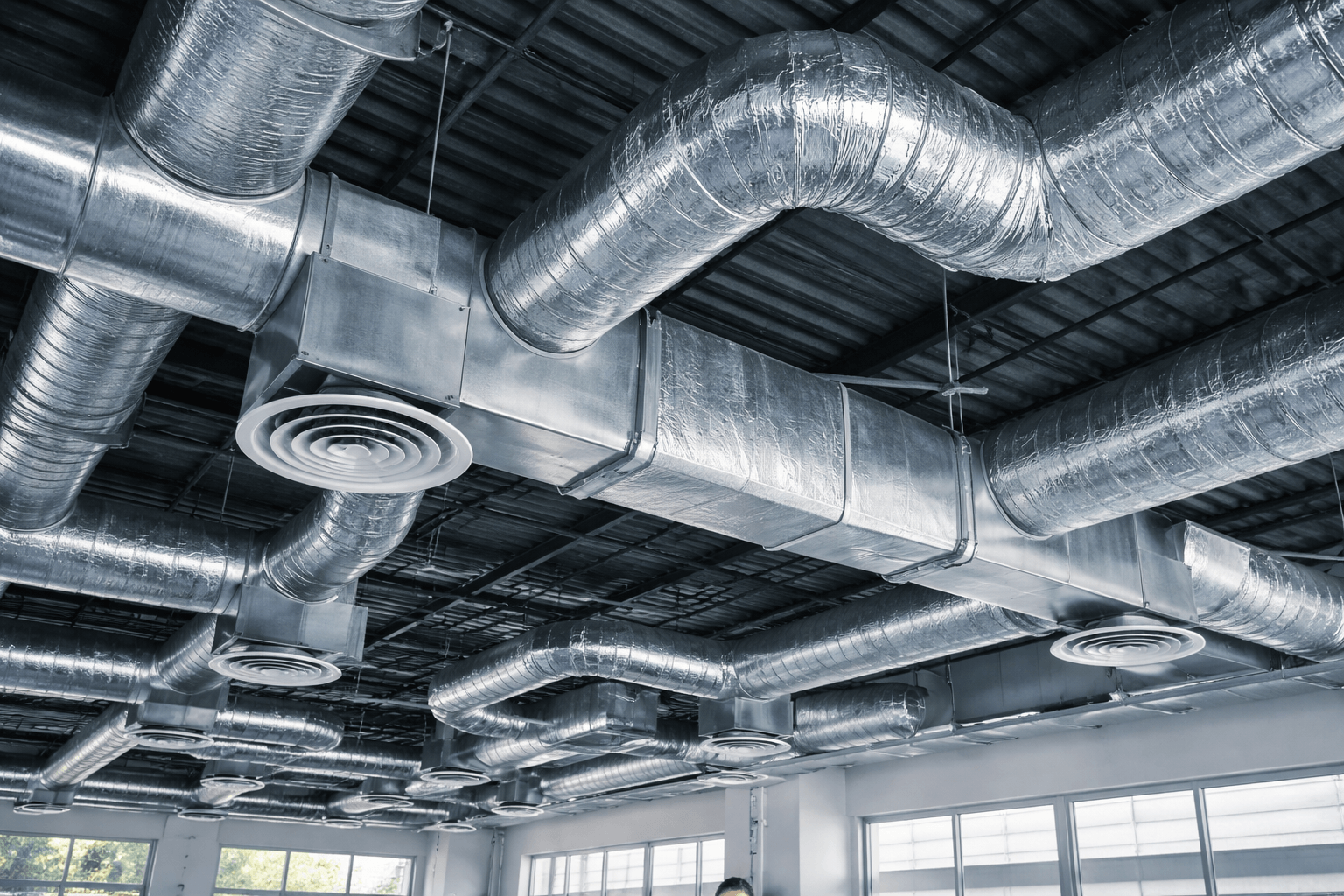
Getting good cooling isn’t just about buying a powerful AC and calling it a day. The HVAC duct system actually does most of the heavy lifting behind the scenes. At Techno Power Aircons, we’ve seen plenty of setups where expensive systems just don’t deliver and almost always, the ductwork is the reason.
If you’re setting up a new system or fixing an old one, it helps to understand how air actually moves through your space. Small design choices can make a big difference. Sometimes annoyingly big.
This isn’t a textbook guide. Just practical things that actually matter.
Why HVAC Duct System Design Matters
Think of your HVAC setup like a road network. Even if you’ve got a great car, bad roads slow everything down.
Same thing here.
When duct design is off, you’ll notice things like:
- One room freezing while another feels stuffy
- Electricity bills creeping up for no obvious reason
- That constant whooshing or rattling sound
- Systems wearing out faster than they should
A well-planned HVAC duct system keeps airflow smooth and consistent. Nothing fancy, just working the way it should.
Key Components of an HVAC Duct System
Before getting into design tips, it helps to know what you’re dealing with.
| Component | What it actually does |
| Supply Ducts | Push cool air into rooms |
| Return Ducts | Pull warm air back |
| Dampers | Control where air goes |
| Insulation | Keeps temperature stable |
| Diffusers and Grilles | Spread air evenly |
Miss one piece or get it wrong, and the whole system starts acting weird.
1. Proper Duct Sizing is Critical
This one gets messed up more often than you’d expect.
If ducts are too small, airflow struggles. Too big, and the air just kind of… drifts without force.
Neither is good.
A lot of people skip proper calculations and just “estimate.” That’s usually where things go wrong. Good HVAC dealers in Chennai won’t do that. They’ll size ducts based on actual load, not guesswork.
2. Optimize Duct Layout for Efficiency
Shorter paths work better. Always.
If your duct system looks like a maze, you’re going to lose airflow along the way.
Some simple fixes:
- Keep runs as straight as possible
- Avoid sharp turns
- Use gentle curves instead
- Try to keep ducts centrally located
Even small layout tweaks can noticeably improve cooling. It’s not complicated, just often ignored.
3. Seal All Duct Joints Properly
This sounds basic but it’s a big deal.
Air leaks out of tiny gaps. Over time, that adds up.
Places where leaks usually happen:
- Joints
- Old connections
- Poor finishing work
Using proper sealant helps. Not cheap tape that dries out in a few months.
If you’ve ever felt weak airflow even with a strong unit, chances are air is escaping somewhere.
4. Insulation for Energy Efficiency
In hot places like Chennai, insulation isn’t optional. It’s necessary.
Without it, cooled air picks up heat before it even reaches the room. Kind of defeats the purpose.
This becomes even more important when using Ductable Air Conditioners, since the air travels longer distances.
Good insulation keeps the cooling where it belongs. Inside the ducts.
5. Balance Airflow Across All Rooms
This is where people usually start complaining.
“Why is one room always hotter?”
Most of the time, it’s airflow imbalance.
You fix it by:
- Adjusting dampers
- Matching airflow to room size
- Making sure return air can circulate properly
Experienced HVAC Consultants in Chennai usually fine-tune this during setup. It’s not a one-time thing either, sometimes it needs slight adjustments later.
6. Consider Zoning Systems
Not every space needs the same level of cooling.
Zoning lets you control different areas separately. Which is honestly more practical than cooling everything equally.
Especially useful in:
- Offices
- Villas
- Large commercial buildings
It saves energy and avoids overcooling unused spaces.
7. Use a Dual Duct HVAC System When Needed
A dual duct HVAC system isn’t something every building needs, but when used right, it’s very effective.
Basically, it runs two ducts. One for warm air, one for cool air.
Works well in:
- Large buildings
- Areas with different temperature needs
It gives more control, but design has to be precise. This is where proper HVAC Engineering Services really matter.
8. Ensure Proper Return Air Design
People focus a lot on supply air, but return air is just as important.
If air can’t circulate back properly, the system struggles.
Things to check:
- Enough return vents
- Good placement
- No blockage
Bad return design can quietly mess up the whole system.
9. Choose the Right Type of HVAC System
Your duct design depends a lot on the system you choose.
Common options include:
- Split units
- Ductable setups
- VRF or VRV systems
For larger projects, VRF/VRV, AHU Air Conditioners tend to be more flexible.
Working with experienced VRF/ VRV AC dealers in Chennai helps avoid compatibility issues later.
10. Regular Maintenance and AMC
Even a perfect setup won’t stay perfect forever.
Dust builds up. Leaks happen. Things shift.
Regular checks make a difference:
- Cleaning ducts
- Checking airflow
- Inspecting insulation
- Fixing leaks early
That’s why many people go for AC AMC in Chennai. It keeps everything running without surprises.
Choosing the Right AC Brand and Dealer
The duct system matters, but so does the unit itself.
Not every AC brand performs the same in real-world conditions.
Before deciding, it’s worth looking into:
- Energy ratings
- Reliability
- Long-term performance
Some people compare the top 5 AC brands in India, while others look at the Top ten AC brands in 2026 for newer options.
Either way, choosing from reliable AC brands in Chennai and working with a good AC dealer in Chennai makes the whole process smoother.
Importance of Professional Installation
This is not a DIY job.
Improper installation leads to long-term problems that are hard to fix later.
Better to go with:
- Skilled HVAC Contractors in Chennai
- Experienced teams
- People who actually understand airflow, not just equipment
Also, having access to reliable AC Spare Parts Dealers in Chennai helps when replacements are needed.
Common Mistakes to Avoid in HVAC Duct Design
Some mistakes show up again and again:
- Wrong duct size
- Poor insulation
- Too many bends
- Not enough return air
- Skipping airflow balancing
Even if you pick the best AC brand, these issues can still ruin performance.
When to Upgrade Your HVAC Duct System
Sometimes, repairs aren’t enough.
You might need an upgrade if you notice:
- Uneven cooling
- Higher energy bills
- Frequent service issues
- Old ductwork
Modern systems, especially from VRF dealers in Tamil Nadu or VRV dealers in Tamil Nadu, can improve both efficiency and control.
Conclusion
A good HVAC duct system isn’t something you notice when it works well. But when it doesn’t, you definitely feel it.
From sizing and layout to insulation and airflow, every small detail adds up. Get those right, and the whole system runs smoother, quieter, and more efficiently.
At Techno Power Aircons, the focus is always on getting these fundamentals right. Whether it’s design, installation, or ongoing support, everything is handled with real-world performance in mind. Even for something like a Ductable AC Dealer in Chennai requirement, the approach stays practical, not overcomplicated.
Reach out to Techno Power Aircons
FAQs About HVAC Duct Systems
1. What is an HVAC duct system?
It’s basically a network of ducts that moves air from your AC system into different rooms.
2. How does duct design affect cooling performance?
Bad design restricts airflow or causes leaks. Good design keeps everything balanced and efficient.
3. What is a dual duct HVAC system?
It uses two separate ducts for hot and cold air, giving better control over temperature.
4. How often should HVAC ducts be cleaned?
Usually every 2 to 3 years. Depends on usage and environment though.
5. Can poor duct design increase electricity bills?
Yes, quite a bit actually. Air loss and inefficiency make the system work harder.
Leave a Reply