
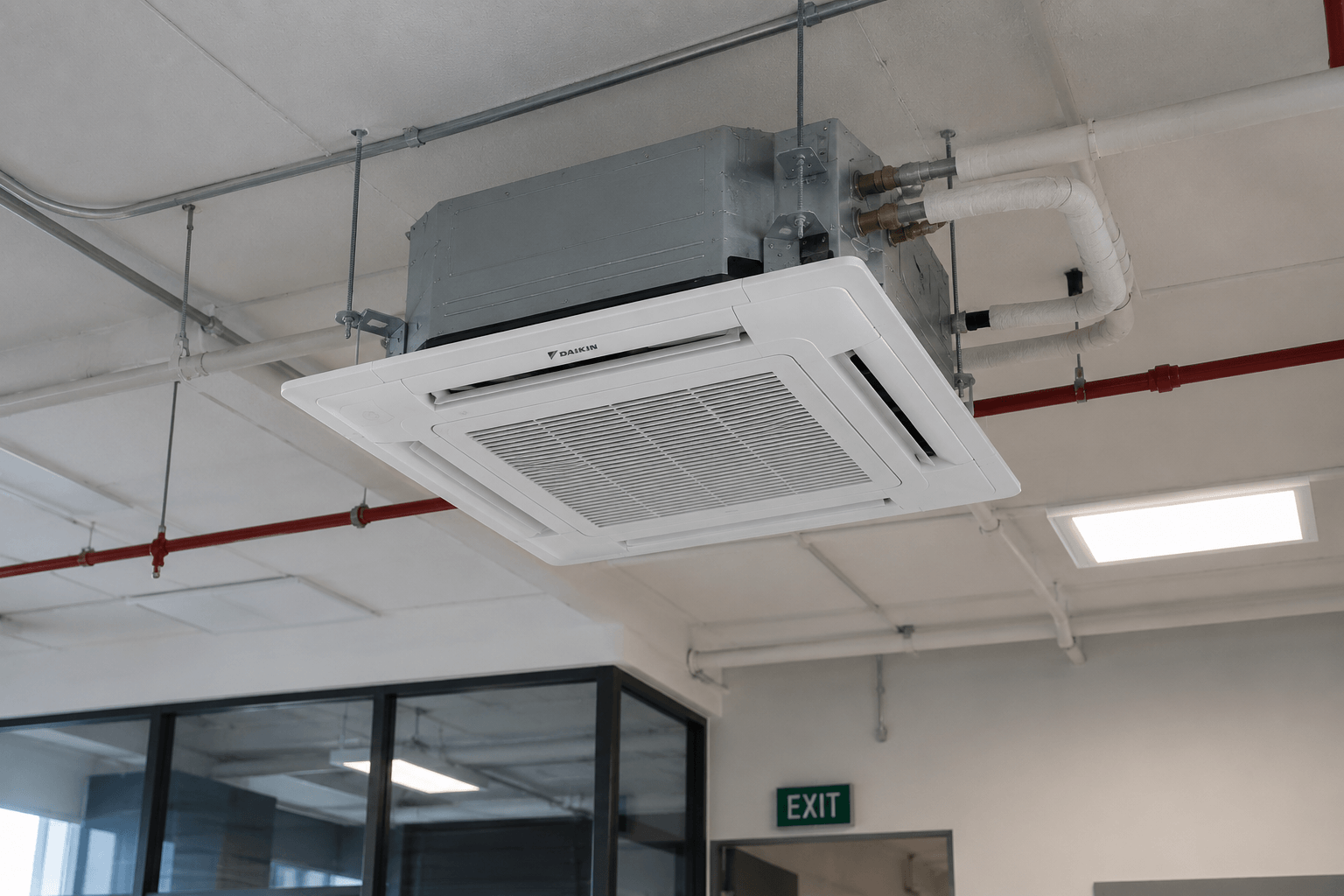
So you’ve decided on a Daikin central AC for your office or home in Chennai. Good choice. Daikin is consistently among the most reliable commercial cooling brands in India and for Chennai’s climate specifically it handles the heat and humidity better than most. But here’s the thing that doesn’t get talked about enough: the system is only as good as the installation. A poorly installed Daikin central AC will underperform, run up your electricity bill and cause problems that show up months later – sometimes in ways that aren’t covered under warranty.
At Techno Power Aircons, we’ve been installing central AC systems across Chennai since 1982. This post walks you through what a proper Daikin central AC installation actually involves and the questions you should ask any installer before they start work.
Step One Happens Before Anyone Picks Up a Tool
The most important part of any central AC installation isn’t the physical work. It’s what happens beforehand.
A proper installation starts with a site assessment and heat load calculation. This is where a technician looks at your floor plan, ceiling height, window orientation, insulation quality and how the space is actually used day to day. Based on that, the right system type is recommended – cassette, ductable or VRF – along with the correct capacity.
Skipping this step is where most problems begin. Oversized systems cool too fast, cycle on and off constantly and leave spaces feeling damp rather than comfortable. Undersized systems run continuously and never quite reach the set temperature. Both situations increase electricity consumption and wear on the equipment.
If a dealer or installer quotes you a system without first asking about your floor plan and usage, that’s a red flag worth taking seriously. Working with experienced Daikin VRF dealers in Chennai means this step is built into the process from the start.
What the Installation Process Actually Involves
Once the right system is selected, here’s what a proper Daikin central AC installation should cover:
For Cassette and Split Systems
- Indoor unit mounting at the correct height and orientation
- Copper pipe sizing matched to the system’s refrigerant requirement
- Proper pipe insulation to prevent condensation and heat gain
- Drain line routing with adequate slope to avoid water pooling
- Vacuum testing of the refrigerant circuit before charging
- Refrigerant charging to the manufacturer’s specified level
- Electrical connection check and earthing verification
- Performance test after startup – temperature differential, airflow and noise check
For VRF and Ductable Systems
Everything above applies, plus:
- Refrigerant piping network design across zones
- Duct layout and static pressure calculation for ductable systems
- Outdoor unit positioning for adequate airflow clearance
- Branch controller and indoor unit addressing for VRF setups
- Full commissioning with load balancing across zones
- Handover documentation including system settings and zone configuration
For larger commercial projects involving VRF/VRV and AHU systems the commissioning stage alone can take several hours. If an installer is done in under 30 minutes on a multi-zone VRF setup, something was missed.
Installation Timeline: What to Expect
| System Type | Typical Installation Time | Commissioning |
| Split AC (single unit) | 2 to 4 hours | 30 minutes |
| Cassette AC (per unit) | 3 to 5 hours | 45 minutes |
| Ductable AC | 1 to 3 days | 2 to 4 hours |
| VRF system (mid-size office) | 3 to 7 days | Half day to full day |
These are realistic timelines for work done properly. Anything significantly faster usually means steps were skipped.
Questions to Ask Your Installer Before Work Starts
Most buyers focus on getting the lowest quote. The better focus is on understanding what that quote actually includes. Before any installer starts work on your Daikin central AC ask these directly:
- Will you do a heat load calculation before recommending capacity?
- What copper pipe specification will you use and why?
- Do you carry a vacuum pump and will you run a vacuum test before charging refrigerant?
- Who does the actual installation – your own team or subcontractors?
- What documentation will I receive after commissioning?
- Is there a service warranty on the installation work itself?
If the answers are vague or the installer seems surprised by the questions that tells you something useful. A team that does proper work is comfortable explaining it.
For commercial projects the questions extend further. What experience does the team have with centralised AC installation in Chennai? Can they show examples of similar projects? Do they have in-house expertise for HVAC Engineering Services or do they depend on external consultants?
After Installation: The Things That Determine Long-Term Performance
A good installation sets the baseline. What keeps performance consistent over years is maintenance.
For Chennai’s climate – dust from construction, coastal humidity, ten months of heavy AC use – filters and coils need attention more regularly than manufacturers’ general guidelines suggest. A unit that isn’t serviced on schedule loses efficiency faster than one that is and the difference shows up clearly on electricity bills.
One thing worth considering alongside any new installation is an AC AMC in Chennai that covers scheduled preventive maintenance visits through the year. For commercial systems especially it removes the scramble of finding a technician when something goes wrong in peak summer.
Having access to an AC spare parts dealer in Chennai who stocks genuine Daikin components also matters more than people expect. Warranty repairs and out-of-warranty replacements both go faster when parts don’t need to be ordered and waited on.
And if you’re using a split or cassette Daikin unit at home alongside a central system, small things like understanding Good Sleep Mode in Daikin AC and Econo Mode in Daikin AC can make a noticeable difference to how the system performs day to day.
Conclusion
Getting a Daikin central AC installed correctly in Chennai isn’t complicated, but it does require working with someone who takes the process seriously. The site assessment, the pipe specification, the vacuum test, the commissioning procedure – none of these are optional extras. They’re what separates a system that runs well for fifteen years from one that causes problems in the first twelve months.
If you’re planning a Daikin central AC project in Chennai and want an honest conversation about what it involves, Techno Power Aircons is a good place to start. We handle everything from system selection through installation and long-term maintenance – and we’ve been doing it since 1982.
Contact us today to arrange a site visit and get a recommendation based on your actual space.
Frequently Asked Questions
Q1: How long does a Daikin central AC installation take in Chennai?
It depends on the system type. A single split or cassette unit typically takes three to five hours including commissioning. A ductable system for a mid-size office takes one to three days. A VRF installation for a multi-room commercial space generally takes three to seven days with a separate commissioning session at the end.
Q2: What is a vacuum test and why does it matter for Daikin AC installation?
A vacuum test removes all air and moisture from the refrigerant circuit before the system is charged. If this step is skipped moisture can enter the circuit and cause long-term compressor damage. It’s a non-negotiable step in any proper Daikin central AC installation and a good way to judge whether an installer is doing the job correctly.
Q3: Can I use any AC installer for a Daikin central AC or does it need to be authorised?
For warranty-period work always use an authorised installer. After the warranty period a technically qualified installer with brand-specific training is acceptable for servicing. For VRF and large commercial installations experience with Daikin systems specifically matters because the commissioning process involves system-specific tools and software that general AC technicians may not have.
Q4: What should be included in a Daikin central AC installation quote?
A complete quote should include equipment supply, copper piping material and labour, drain line routing, electrical connections, refrigerant charging and commissioning. Any quote that separates these into individually priced items is easier to compare honestly. Watch for quotes that look low but exclude materials or commissioning.
Q5: How do I know if my Daikin central AC was installed correctly?
After installation the system should be commissioned with documented readings – suction and discharge pressure, indoor and outdoor temperature differential and airflow check at each indoor unit. You should receive a handover document with these readings and the system configuration. If no documentation is provided or the installer leaves immediately after startup that’s a sign the commissioning process was not completed properly.
Leave a Reply