
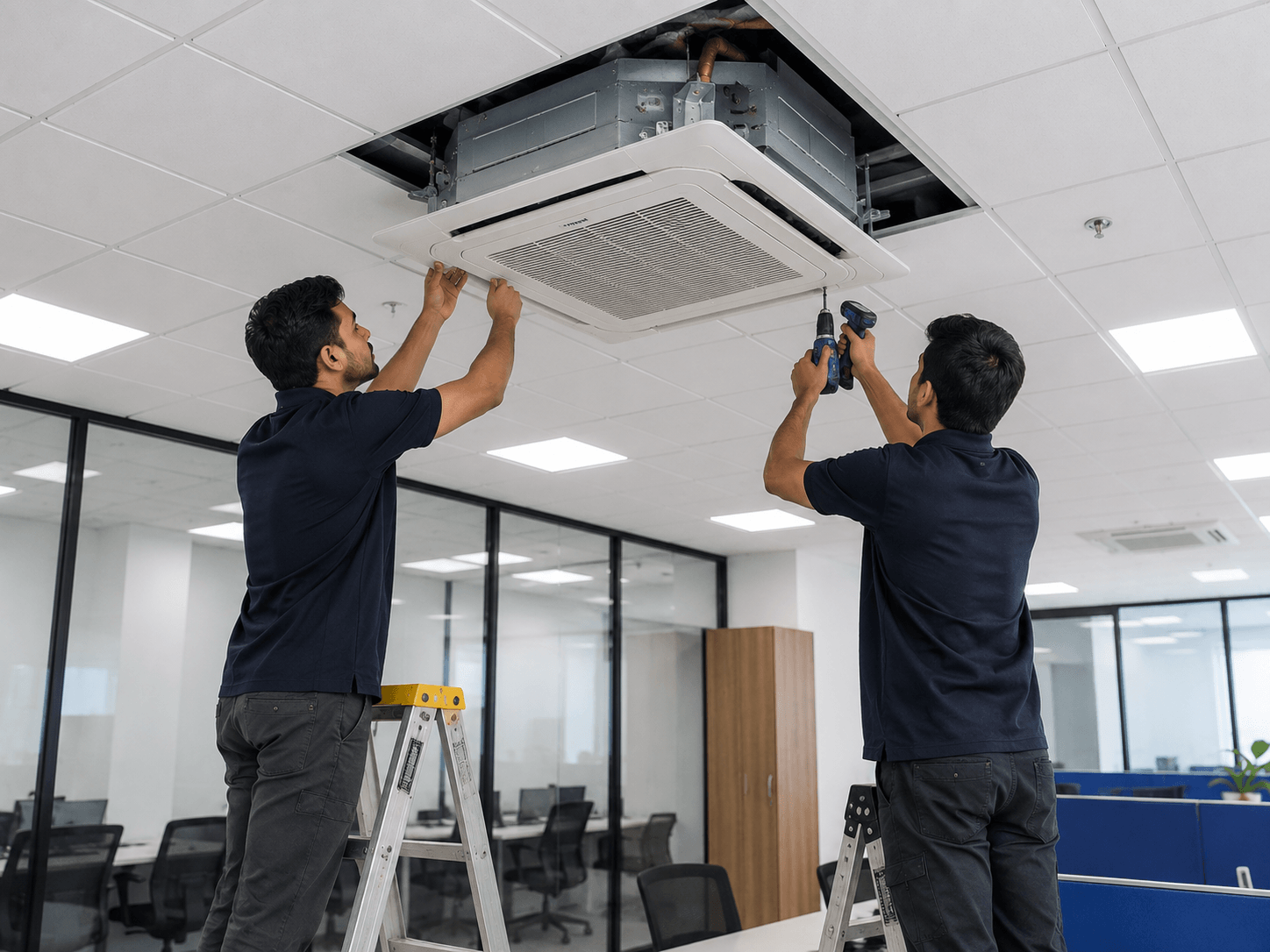
If you’re thinking about putting in a Daikin Ceiling AC, it really helps to know what your ceiling actually needs, how the install goes, and roughly what you’ll end up paying. Sorting that out early saves you from the nasty surprises that show up halfway through a job. Done right, a ceiling-mounted unit cools evenly, looks clean, and just works – at home, in an office, wherever.
We get this a lot at Techno Power Aircons. People walk in loving the look of these systems, then go a bit quiet when the conversation turns to false ceiling depth, how long it’ll take, or the bill. So here’s most of what you’d want to know before you commit.
Why Is a Daikin Ceiling AC Becoming Popular in Chennai?
Chennai weather doesn’t really let up, so cooling isn’t a seasonal thing here – it’s most of the year. And a lot of property owners have started moving past the usual wall-mounted box because ceiling units push air around better and don’t break up the look of a room.
You’ll see a Daikin Ceiling AC turning up in places like:
- Corporate offices
- Retail stores
- Restaurants
- Conference rooms
- Premium homes
- Educational institutions
Folks weighing up the Best AC brands in Chennai tend to land on Daikin pretty quickly, mostly because of the energy efficiency and the fact that the cooling stays consistent rather than fluctuating.
What Is a Daikin Ceiling AC?
Simply put, a Daikin Ceiling AC sits inside or just below the ceiling instead of on a wall. The big difference is reach – it spreads cool air across a much wider area, and it more or less disappears into the interior.
The usual options here are:
- Cassette AC systems
- Concealed ducted units
- Ceiling suspended units
If you’re hunting for a Cassette AC Dealer in Chennai, the cassette models are usually what people end up picking, mainly for that 360-degree airflow that covers a room without obvious dead spots.
What False Ceiling Depth Is Required for a Daikin Ceiling AC?
This is hands down one of the first things people ask when we’re on site.
Short answer: it depends on the model and how the install is designed. There’s no single number.
Typical False Ceiling Requirements
| AC Type | Recommended False Ceiling Depth |
| Cassette AC | 250 mm to 350 mm |
| Concealed Ducted AC | 300 mm to 450 mm |
| VRF Indoor Unit | 300 mm to 500 mm |
Those are ballpark figures, though. What actually decides it:
- Indoor unit dimensions
- Drainage piping
- Refrigerant piping
- Electrical connections
- Service access requirements
Honestly the cleanest way to nail it down is a site visit – someone who’s done a few of these can eyeball the right depth far better than a chart will.
Why Is False Ceiling Depth Important?
People obsess over picking the unit and then sort of forget the ceiling exists. It’s an easy mistake.
When the depth’s not enough, here’s what tends to go wrong:
- Difficult maintenance access
- Airflow restrictions
- Water leakage issues
- Increased installation costs
- Reduced cooling efficiency
This is exactly the kind of thing worth running past HVAC Consultants in Chennai before you start construction or a renovation. Fixing a ceiling after the fact costs a lot more than getting it right the first time, and it’s a headache nobody enjoys.
What Happens During Daikin Ceiling AC Installation?
Knowing the steps just makes the whole thing less stressful, whether you’re a homeowner or running a facility.
Step 1: Site Assessment
First up, we look at:
- Room dimensions
- Cooling load
- Ceiling height
- Electrical availability
- Outdoor unit placement
The point is to make sure the Daikin Ceiling AC you’re considering actually fits the space – both physically and in terms of cooling demand.
Step 2: System Selection
Depending on the project, the recommendation might be:
- Cassette AC
- Ducted AC
- VRF indoor units
On bigger commercial jobs the ceiling units often get folded into a wider HVAC setup, since you’re trying to control the climate across a whole building, not just one room.
Step 3: False Ceiling Preparation
Before anything goes up:
- Ceiling framing is completed
- Service access points are planned
- Drain lines are positioned
- Refrigerant piping routes are finalized
Step 4: Indoor Unit Installation
The indoor unit gets mounted into the ceiling frame, nice and secure. Leveling matters here more than people expect – get it slightly off and the condensate won’t drain the way it should.
Step 5: Outdoor Unit Installation
Outdoor unit goes somewhere with decent airflow. This is also where the refrigerant connections and the electrical side get sorted out.
Step 6: Testing and Commissioning
Then the technicians check:
- Airflow performance
- Temperature accuracy
- Refrigerant pressure
- Drainage operation
- System controls
We’re a bit stubborn about this part at Techno Power Aircons. Even a top-tier system can underperform if the commissioning gets rushed or skipped, and you’d never know until it’s already an issue.
How Much Does a Daikin Ceiling AC Cost in Chennai?
Depends on capacity and how complicated the install is. There’s no flat rate.
Approximate Cost Guide
| AC Capacity | Estimated Unit Cost | Installation Cost |
| 1.5 Ton Cassette AC | ₹55,000 – ₹80,000 | ₹8,000 – ₹15,000 |
| 2 Ton Cassette AC | ₹70,000 – ₹1,00,000 | ₹10,000 – ₹18,000 |
| Ducted AC Systems | ₹1,20,000+ | ₹20,000+ |
| VRF Indoor Units | Project Based | Project Based |
Things that nudge the price up or down:
- Ceiling modifications
- Copper piping length
- Drainage requirements
- Electrical work
- Building accessibility
For numbers that actually match your project rather than a rough table, most people just check with Daikin VRF AC Dealers in Chennai and get a proper quote.
What Are the Benefits of Installing a Daikin Ceiling AC?
Better Air Distribution
Wall units throw air in one direction. Ceiling systems spread it out, so you don’t get that one cold corner and one warm corner thing.
Cleaner Interior Appearance
It tucks into the ceiling and basically vanishes. No box interrupting the wall.
Energy Efficiency
The newer Daikin units run on inverter tech, which keeps the electricity bill from creeping up the way older systems did.
Lower Noise Levels
Most of the mechanical parts sit hidden away, so these run pretty quietly.
Flexible Applications
Homes, offices, shops – they fit just about anywhere. That range is a big reason a lot of businesses dealing with HVAC Contractors in Chennai go ceiling-mounted instead of anything else.
Are There Any Drawbacks?
Sure, nothing’s perfect.
Higher Initial Cost
They cost more upfront than a regular wall split. No way around that.
False Ceiling Requirement
You generally need enough ceiling room to work with, which not every space has.
Professional Installation Needed
This isn’t a DIY job. A sloppy install hurts cooling and makes future servicing a pain. Sticking with proper HVAC dealers in Chennai is how you keep those risks low.
Is a Daikin Ceiling AC Suitable for Homes?
Yeah, definitely.
A lot of newer apartments and villas have gone this route because you get:
- Better aesthetics
- More usable wall space
- Uniform cooling
- Premium interior appearance
When people start comparing the top 5 AC brands in India for a high-end home build, Daikin keeps coming up. It’s just got that reputation for residential work.
How Does a Daikin Ceiling AC Compare to Other Systems?
Ceiling AC vs Wall-Mounted Split AC
| Feature | Ceiling AC | Split AC |
| Appearance | Premium | Standard |
| Air Distribution | Excellent | Moderate |
| Installation Cost | Higher | Lower |
| Maintenance Access | Requires Planning | Easier |
| Suitable for Large Rooms | Yes | Limited |
Plenty of people putting together the Top ten AC brands in 2026 point out something worth remembering – picking the right type of system matters about as much as picking the right AC brand in the first place. A great brand in the wrong configuration still disappoints.
Can a Daikin Ceiling AC Be Integrated with VRF Systems?
It can, yeah.
Loads of commercial buildings run ceiling indoor units off a larger VRF setup. That gets you:
- Individual room control
- Energy savings
- Flexible operation
- Scalability
Businesses after VRF AC Installation in Chennai usually pick cassette or concealed indoor units as part of the bigger picture. The larger multi-zone jobs tend to go through experienced VRF/ VRV AC dealers in Chennai who actually specialise in this stuff – and if you’re outside the city, the same applies to VRF dealers in Tamil Nadu and VRV dealers in Tamil Nadu, since multi-zone work really isn’t something to hand to a generalist.
Why Professional Installation Matters
A bad install can leave you with:
- Reduced efficiency
- Refrigerant leaks
- Water leakage
- Increased energy consumption
- Frequent service issues
Which is why a lot of owners stick with an established AC dealer in Chennai – someone who handles the install and the after-sales side, not just the sale and a wave goodbye. Good installation also keeps everything lined up with broader HVAC Engineering Services needs in larger commercial buildings, and that’s where things like VRF/VRV, AHU Air Conditioners come into the conversation on bigger projects.
How Can Regular Maintenance Improve Performance?
Even the nicest system needs a bit of looking after.
Regular servicing helps:
- Maintain cooling efficiency
- Reduce electricity usage
- Prevent breakdowns
- Extend equipment lifespan
A good number of people just sign up for AC AMC in Chennai plans so they’re not chasing technicians every time something acts up. And having decent AC Spare Parts Dealers in Chennai to fall back on for genuine components matters more than you’d think over the long run – cheap parts have a way of biting back.
Conclusion
A Daikin Ceiling AC is a solid pick if what you want is efficient cooling, a clean interior and comfort that holds up over the years. The install does need some planning, no question – but for most people the payoff is worth the higher starting cost.
Get your head around the false ceiling depth, the steps involved, and the cost factors before you begin, and the whole project tends to go a lot smoother. And honestly, when you’re sorting through AC brands in Chennai for either a home upgrade or a full commercial job, the brand matters – but so does picking someone who can actually install it properly. The best AC brand in the world won’t save a rushed install, and finding the best ac brand is only half the work.
Get Expert Installation Support
Frequently Asked Questions
1. What is the minimum false ceiling depth for a Daikin Ceiling AC?
Most cassette systems want roughly 250 mm to 350 mm. It shifts a bit depending on the model, so don’t treat that as gospel.
2. Is a Daikin Ceiling AC suitable for residential homes?
Yes – plenty of homeowners go with ceiling systems for the cleaner look and the more even cooling.
3. How long does installation take?
Usually one to three days. Depends on how complex the job is and how much ceiling work needs doing.
4. Is ceiling AC more expensive than split AC?
Generally, yes. The upfront cost runs higher because of the install work and any ceiling changes.
5. Can ceiling AC systems be connected to VRF systems?
Yes. Ceiling indoor units are a common choice in VRF setups across offices, hotels and commercial buildings.
Leave a Reply