
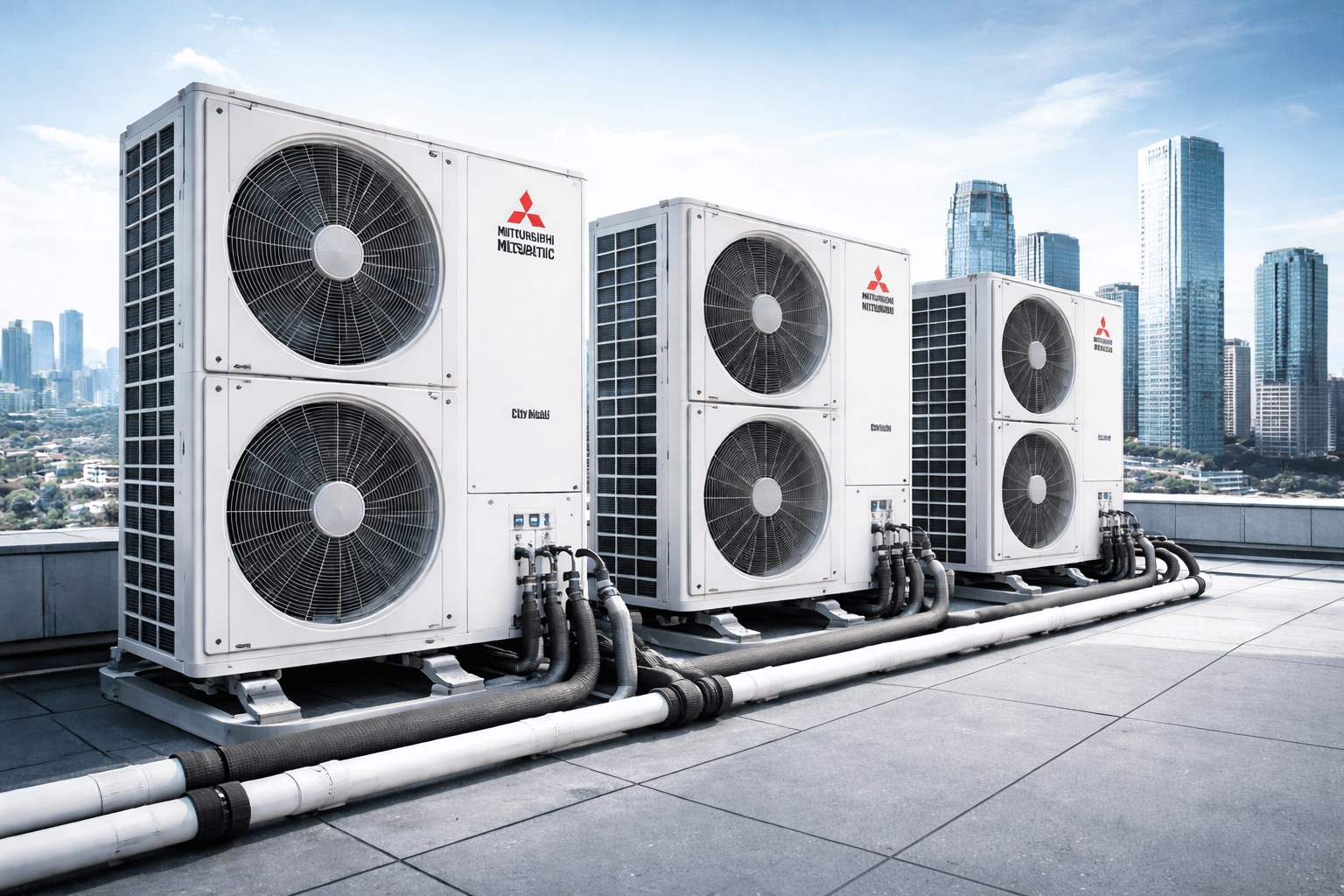
Air conditioning in commercial buildings isn’t just about comfort anymore. It’s not some “nice-to-have” add-on. It’s infrastructure. Just like electrical systems or plumbing.
Think about an IT park, a hospital, a retail store, or even a tall office building. If the cooling fails, everything feels it employees slow down, customers get irritated, and equipment overheats. It’s all connected.
So builders don’t take HVAC decisions lightly. They’re not just looking for something that blows cold air. They want efficiency. Flexibility. Lower long-term bills. And honestly, fewer headaches five years down the line. That’s where Mitsubishi VRF AC keeps coming up in conversations.
A proper VRF AC system (Variable Refrigerant Flow) is smarter than traditional central or split systems. And when it comes to VRF AC options in the market, Mitsubishi has built a strong reputation in commercial construction circles. Not by hype, mostly by performance.
Companies like Techo Power Aircons often recommend Mitsubishi VRF AC for commercial spaces for exactly these reasons. When you’re designing cooling for a building that’s meant to operate for 15 or 20 years, you don’t gamble. You go with what’s proven to work.
Understanding VRF AC Systems
What Is a VRF AC System?
A VRF AC system, short for Variable Refrigerant Flow, is basically a centralized system that doesn’t behave like one.
Instead of cooling everything at the same level, it adjusts the refrigerant flow depending on what each area actually needs. One room can be fully occupied and needs more cooling. Another might be half empty. The system responds accordingly.
Here’s what makes it different from older HVAC setups:
- It cools multiple zones at the same time
- The compressor doesn’t just switch on and off, it adjusts speed
- It avoids wasting power where cooling isn’t needed
- One outdoor unit can connect to different types of indoor units
Traditional systems tend to treat an entire floor like one big box. A VRF AC doesn’t. It works room by room. Zone by zone. That precision is a big deal in commercial spaces.
How Mitsubishi VRF AC Technology Works
Mitsubishi Electric was actually one of the early innovators in VRF technology. They’ve been refining it for years, and it shows in the way their systems behave under load.
Their Mitsubishi VRF AC units use inverter-driven compressors. Instead of constantly running at full power and shutting off, they adjust continuously. It sounds simple, but that small shift changes everything in terms of efficiency.
Some key features worth noting:
- Inverter compressor control for precise energy use
- Heat recovery options (cool one area, reuse that energy elsewhere)
- Smart zoning controls
- Quiet operation
- Centralized monitoring systems
The result? Lower power bills, smoother temperature control, and less strain on the equipment over time.
For commercial projects that operate 10–20 years or more, those differences add up a lot.
Advantages of Mitsubishi VRF AC in Commercial Projects
1. Energy Efficiency That Actually Shows on Bills
Energy costs are no joke in commercial buildings. In many cases, HVAC alone accounts for a major chunk of monthly expenses.
Mitsubishi VRF AC systems:
- Adjust output in real time
- Avoid constant full-load operation
- Maintain steady temperatures without sharp power spikes
In larger office setups, energy savings of 30–40% compared to conventional systems aren’t unusual.
For example, IT offices running 24/7 don’t need every zone cooled at midnight. VRF AC systems can reduce cooling in unused areas automatically. That kind of control saves serious money over time.
2. Flexibility for Modern Building Designs
Architects don’t design simple box-shaped buildings anymore. There are curves, glass facades, mixed-use layouts, and phased developments, it gets complicated.
VRF AC systems are flexible enough to handle that.
They allow:
- Longer piping distances
- Compact outdoor unit placement
- Different indoor unit styles (cassette, ducted, wall-mounted)
- Future expansion without redesigning everything
Builders working on malls or mixed-use spaces like the fact that Mitsubishi VRF AC can grow with the project. Add a floor later? Modify a section? It’s manageable.
3. Space Matters And VRF Saves It
In commercial real estate, every square foot counts. Mechanical rooms don’t generate revenue.
Compared to bulky centralized chillers:
- VRF AC systems need less shaft space
- Outdoor units are more compact
- No massive chiller plants required
That means more usable space. More rentable area. Builders notice that immediately.
4. Reliability and Lower Maintenance Surprises
One big reason builders lean toward Mitsubishi VRF AC is simple reliability.
These systems are built for continuous commercial use. They handle variable loads well. And they come with intelligent fault detection systems that alert technicians early.
Instead of sudden breakdowns, maintenance becomes planned and predictable.
In places like hospitals or IT parks, downtime isn’t just inconvenient, it’s costly. Reliable systems reduce that risk.
5. Sustainability Isn’t Optional Anymore
Green building certifications aren’t just buzzwords now. Many projects actively target LEED or IGBC ratings.
Mitsubishi VRF AC systems support that goal by:
- Using efficient inverter technology
- Supporting eco-friendly refrigerants
- Reducing overall energy consumption
Builders looking at long-term environmental compliance find VRF AC systems align better with sustainability targets.
Why Builders Choose Mitsubishi VRF AC Over Other VRF AC Systems
There are multiple VRF AC brands in the market. So why Mitsubishi?
1. Brand Trust
Mitsubishi Electric has decades of experience in HVAC technology. In commercial projects, reputation matters. A lot.
Builders prefer reducing uncertainty. A trusted brand feels like less risk.
2. Performance Stability
Mitsubishi VRF AC systems are known for:
- Strong part-load efficiency
- Longer compressor life
- Stable cooling even in high ambient temperatures
In hot regions, where summer pushes systems to the edge, stability becomes non-negotiable.
3. Installation Practicality
Contractors appreciate systems that are:
- Modular
- Straightforward to commission
- Backed by proper technical documentation
Mitsubishi’s VRF AC systems are structured and organized, which makes project execution smoother. And smoother execution means fewer delays.
4. After-Sales Support
Installation is only the first chapter.
Builders look at:
- Spare parts availability
- Service network coverage
- Response times
Strong after-sales support keeps facility managers happy and that matters long after construction ends.
5. Better Lifecycle Cost
Yes, the upfront investment might be slightly higher than traditional systems. But over 10–15 years?
You’re looking at:
- Lower electricity bills
- Fewer major repairs
- Longer equipment lifespan
When builders calculate ROI properly, Mitsubishi VRF AC often makes more financial sense long term.
Conclusion
Commercial buildings need more than cooling. They need smart cooling. Efficient, flexible, reliable, the kind that works quietly in the background without constant intervention.
Mitsubishi VRF AC delivers:
- Real energy savings
- Design flexibility
- Reduced maintenance issues
- Environmental alignment
- Brand-backed reliability
That’s why builders consistently choose it for offices, malls, hospitals, and large developments.
The HVAC decision made today will affect operating costs for decades. And most builders prefer getting that decision right the first time.
If you’re planning a commercial project and weighing your cooling options, Mitsubishi VRF AC deserves serious consideration.
Contact Techno Power Aircons now for consultation, system design, and professional installation tailored to your building’s exact requirements.
FAQs on Mitsubishi VRF AC
- What is Mitsubishi VRF AC?
It’s a Variable Refrigerant Flow air conditioning system designed for commercial spaces, offering zoned cooling and high energy efficiency. - How is a VRF AC system different from traditional AC?
A VRF AC system adjusts refrigerant flow based on demand, allowing independent zone control and reducing energy waste compared to central or split AC systems. - Is Mitsubishi VRF AC suitable for small commercial buildings?
Yes. VRF AC systems are scalable and can work for smaller offices as well as large complexes. - What is the lifespan of a Mitsubishi VRF AC system?
With proper maintenance, it can typically last 15–20 years in commercial use. - Does VRF AC require frequent maintenance?
Not usually. Advanced diagnostics and inverter technology help reduce major maintenance issues. - Is installation complicated?
It requires experienced professionals. Companies like Techo Power Aircons ensure proper system design, piping layout, and commissioning so everything runs smoothly from the start.
Leave a Reply