
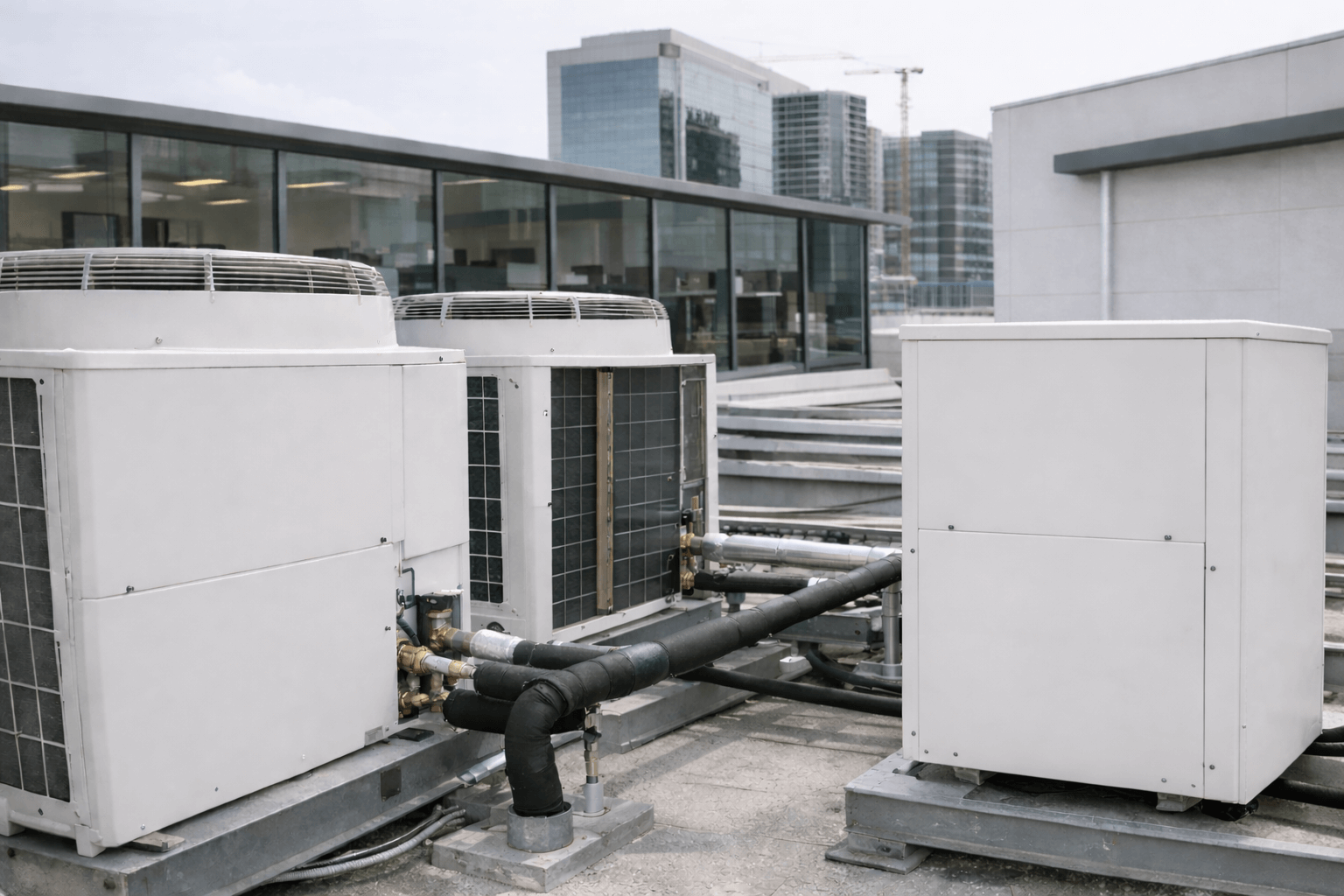
Modern buildings today are honestly a lot more complicated than they used to be. Offices stay open for long hours, commercial spaces have people moving in and out all day, and places like hospitals or hotels can’t really afford a moment of discomfort. Cooling isn’t optional there, it has to work all the time.
Because of that, cooling systems aren’t just some background utility anymore. They’ve become a core part of how a building actually functions.
The older style of cooling buildings doesn’t always handle this well. Those systems usually cool everything the same way, even when different rooms need totally different temperatures. That might work in a small space, but in larger buildings it tends to waste energy and still leaves some areas warmer than others.
That’s where VRF system HVAC technology starts making a lot more sense.
VRF stands for Variable Refrigerant Flow. Basically, it’s a cooling system where one outdoor unit can manage multiple indoor units. Instead of sending the same amount of refrigerant everywhere, the system adjusts the flow depending on what each space actually needs.
So instead of blasting cold air everywhere equally, the system kind of adapts to each room.
More and more modern buildings are choosing VRF system HVAC setups using brands like O General AC. These systems are known for being efficient and reliable. But honestly, even good equipment only works properly when the installation is done right. That’s why many businesses rely on experienced VRF/VRV AC dealers in Chennai.
Companies like Techno Power Aircons, recognized among reliable HVAC Dealers in Chennai, usually handle the planning, installation, and long-term servicing.
What is a VRF System HVAC?
So what exactly is a VRF system?
In simple terms, it’s a more advanced cooling method that can manage temperatures across multiple rooms or zones inside a building.
The core idea behind VRF system HVAC systems is actually pretty straightforward. Instead of pushing the same refrigerant flow to every indoor unit, the system adjusts the flow depending on the cooling demand in each area.
That means one outdoor unit can control many indoor units, and every room can have its own temperature setting.
It sounds simple, but the technology behind it is quite clever.
How Do VRF Systems Work?
A big part of how VRF systems operate comes down to the compressor.
Traditional systems usually switch on and off. Full power, then nothing, then full power again.
VRF compressors work differently. They can change speed gradually depending on the cooling demand.
Because of that, a VRF system HVAC setup can:
- Cool the spaces that actually need cooling
- Avoid wasting electricity
- Maintain more stable indoor temperatures
- Control several zones at the same time
This becomes really useful in large buildings where conditions change constantly — people enter rooms, meetings happen, equipment runs, doors open. Heat levels keep shifting.
A flexible system handles that much better.
How VRF System HVAC Is Different from Traditional Cooling
VRF systems don’t really behave the same way traditional HVAC systems do.
A few key differences stand out.
First, cooling can be controlled much more precisely. Instead of one big system serving the whole building equally, zones can be adjusted individually.
Second, energy use tends to be lower. Because the compressor only works as hard as needed, the system doesn’t run at maximum output all the time.
Another difference is the ductwork. Older systems often require large ducts running throughout the building. VRF systems mainly rely on refrigerant piping instead.
Because of these advantages, VRF system HVAC technology is being used more often in modern commercial projects.
Benefits of VRF System HVAC for Modern Buildings
Energy Efficiency
One of the main reasons people choose VRF system HVAC systems is energy savings.
Since the compressor adjusts speed based on demand, it doesn’t constantly run at full capacity. That small change actually makes a big difference in electricity consumption.
Buildings stay comfortable, but power usage stays lower.
Zone Control
Not every room inside a building needs the same temperature.
Think about it, a packed meeting room will heat up quickly, while a storage room might stay cool for hours.
With the VRF system HVAC, each area can be controlled separately.
For example:
- Meeting rooms can adjust cooling during conferences
- Individual offices can set their own temperatures
- Unused spaces can reduce cooling to save energy
It makes the entire building easier to manage.
Quiet Operation
Another thing people notice with VRF systems is how quiet they are.
Since the compressor ramps up and down gradually, it avoids that loud starting noise older systems tend to make.
For offices or hotels, that’s actually a big advantage.
Flexible Building Design
Traditional duct systems take up a lot of space.
VRF systems mostly use refrigerant piping instead, which gives architects and engineers more flexibility when designing layouts.
For modern buildings where space planning matters, VRF system HVAC systems are often easier to integrate.
Why O General AC Works Well with VRF System HVAC
When it comes to VRF equipment, O General AC is one of the brands many contractors trust.
Their systems are built to perform well even in hot climates, which matters a lot in regions where outdoor temperatures can get pretty intense.
O General VRF systems are designed to:
- Maintain consistent compressor performance
- Manage refrigerant flow accurately
- Deliver cooling even when outdoor temperatures are high
Because of that reliability, a lot of commercial buildings choose O General equipment for their VRF system HVAC installations.
Why Professional Installation Matters
Even the best system can struggle if it isn’t designed correctly.
A VRF system HVAC installation isn’t just about mounting indoor units and connecting pipes. The entire layout has to be planned based on the building’s structure and usage patterns.
Experienced HVAC professionals usually handle tasks like:
- Positioning the outdoor unit in a well-ventilated location
- Placing indoor units where airflow works best
- Designing refrigerant piping routes
- Ensuring electrical connections are safe and stable
Companies like Techno Power Aircons deal with these details regularly, which helps ensure the system runs efficiently from the start.
Where VRF System HVAC Is Commonly Used
VRF system HVAC technology is commonly used in buildings where cooling needs can change from one space to another. In office buildings, for example, different departments, meeting rooms, and workspaces often have different occupancy levels throughout the day, so having individual temperature control makes things much easier.
Hotels also benefit a lot from VRF systems because guests usually expect to adjust the temperature in their own rooms without affecting other areas of the building. In hospitals, maintaining stable indoor conditions across multiple departments is extremely important, and VRF systems help achieve that while still managing energy usage efficiently.
Shopping malls are another good example, since the number of people inside can change constantly during the day, and a VRF system HVAC setup can adjust the cooling levels accordingly to keep the environment comfortable.
Installation and Maintenance of VRF System HVAC
Installing a VRF system takes planning and technical knowledge.
Before installation begins, the system needs to be designed around factors like:
- Total building size
- Room layout
- Occupancy levels
- Cooling demand throughout the day
Once installed, regular servicing helps keep the VRF system working properly.
Maintenance usually includes things like:
- Cleaning filters and coils
- Checking refrigerant pressure
- Inspecting piping connections
- Monitoring compressor performance
Reliable access to ac spare parts in chennai also helps keep systems running smoothly over the long term.
Choosing the Right VRF System HVAC for Your Building
If you’re planning to install a VRF system HVAC setup, there are several things worth considering beforehand.
For example:
- How large the building is
- The cooling needs of different zones
- Energy efficiency expectations
- Budget and operating costs
- Future expansion plans
Working with experienced HVAC professionals makes the process much easier and helps avoid costly design mistakes.
Conclusion
Modern buildings need cooling systems that can adjust to changing conditions without wasting energy.
Traditional HVAC setups sometimes struggle with that. But VRF system HVAC technology handles these challenges much better by adjusting refrigerant flow and allowing independent temperature control across different zones.
When combined with dependable equipment like O General AC units, these systems can deliver consistent cooling performance for many years.
Techno Power Aircons can assist with selecting the right VRF system, installing it correctly, and maintaining it over time. Their team has experience handling HVAC projects for commercial buildings as well as large residential spaces.
Reach out to Techno Power Aircons to discuss your cooling needs and explore the best HVAC solution for your project.
Frequently Asked Questions
What is a VRF system HVAC?
A VRF system HVAC is a cooling technology that adjusts refrigerant flow to multiple indoor units depending on the cooling demand of each space. This allows precise temperature control across different areas of a building.
How is VRF different from VRV?
VRF and VRV systems work in essentially the same way. VRV is simply a trademarked name used by certain manufacturers.
Are VRF systems energy efficient?
Yes. VRF systems adjust compressor speed and refrigerant flow based on demand, which reduces energy consumption compared to traditional HVAC systems.
Where are VRF systems commonly used?
They are widely used in offices, hotels, hospitals, shopping malls, and large residential buildings.
How often should VRF systems be maintained?
Most VRF system HVAC systems should be serviced several times a year depending on how heavily they are used.
Leave a Reply