
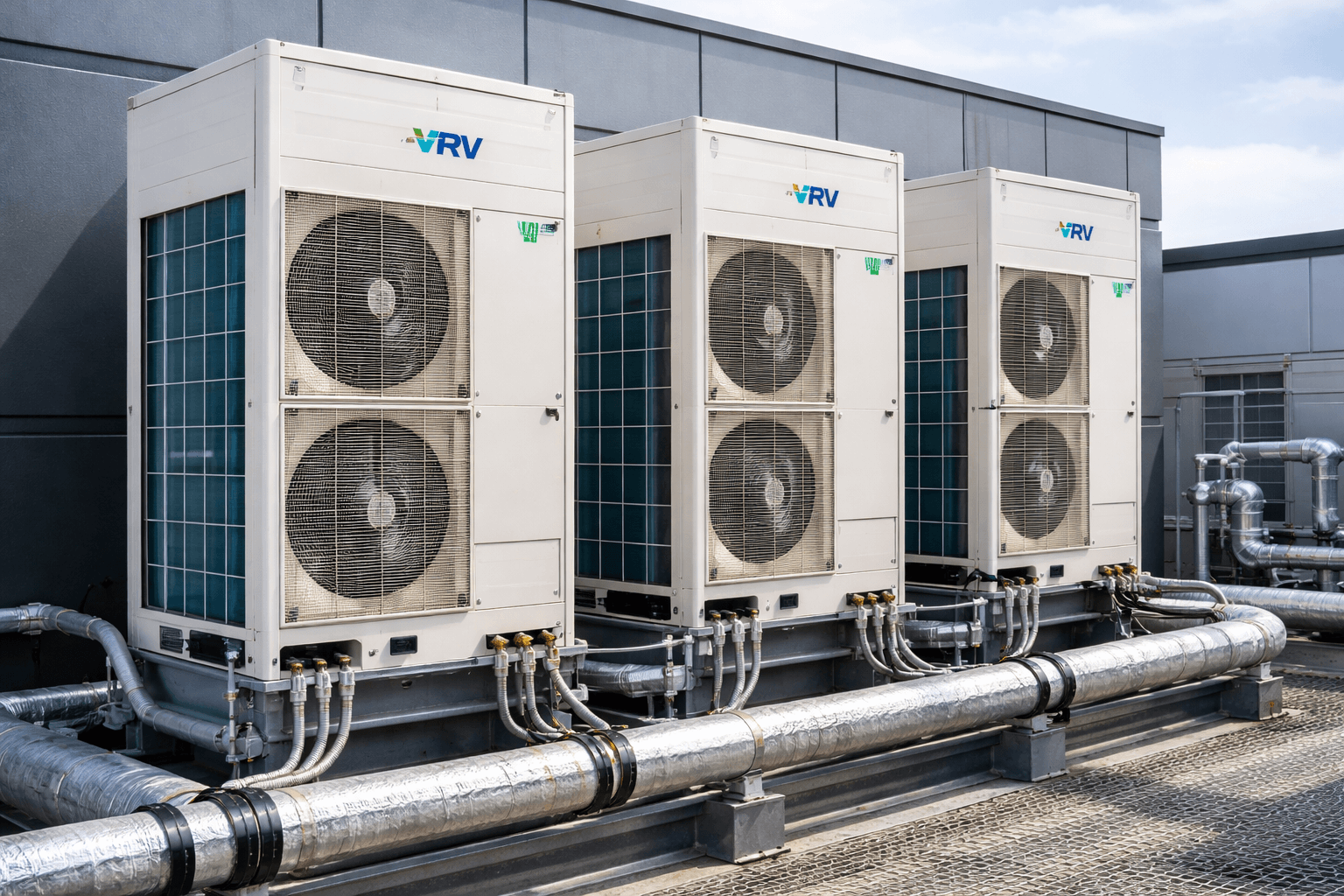
If you’ve ever walked through a big office building or a hotel and wondered, why is this room freezing while the next one feels oddly warm? Yes, getting the temperature right across a bunch of rooms isn’t as simple as it sounds. Most traditional air conditioners kind of treat the entire building like one big box. And honestly, that approach doesn’t really work well in modern spaces where every room gets used differently. That’s where a VRV AC system starts to make a lot more sense.
At Techno Power Aircons, we work with VRV and VRF systems pretty frequently, especially in larger commercial projects. The main reason is, they give buildings far more control over how cooling actually works. Instead of pushing the same temperature everywhere, a VRV setup connects multiple indoor units to one outdoor unit and lets each space handle its own cooling.
In this blog, we’ll go through how VRV technology actually works, why it is ideal for multi-zone cooling and why more businesses seem to be leaning toward it when they plan modern HVAC setups.
What Exactly Is a VRV AC System?
A VRV AC system (Variable Refrigerant Volume) is basically a more flexible kind of air-conditioning system. The idea is pretty straightforward, the system adjusts the amount of refrigerant flowing through it depending on how much cooling each indoor unit actually needs. In simpler terms, it doesn’t just run at full power all the time. It sort of adapts as it goes.
Traditional AC systems usually operate at a fixed capacity. They switch on, cool everything at once and then shut off when the temperature drops. After a while the cycle repeats again. VRV systems work a bit differently than it. They continuously regulate refrigerant flow so the temperature stays stable without wasting energy or overcooling spaces. A typical VRV setup usually includes a few key parts:
- An outdoor condenser unit
- Multiple indoor units placed in different rooms or zones
- Refrigerant piping that connects the whole system
- Smart control systems that manage how everything runs
One of the more interesting things about the system is that a single outdoor unit can support several indoor units and each of those can run independently. That means different rooms, floors or zones can set their own temperature without affecting the others. For larger buildings, this kind of flexibility makes a noticeable difference.
Techno Aircons, deals with distribution and installation of VRV AC systems for offices, hotels, commercial buildings and other multi-zone spaces where consistent and efficient cooling really matters. As a trusted AC dealer in Chennai, our team helps businesses choose the right configuration so the system actually fits the building layout and cooling needs, not the other way around.
Why Multi-Zone Cooling Is Actually Important
Not every part of a building needs the same amount of cooling. Think about a typical office building for a moment.
- A conference room with 12 people inside heats up so quickly.
- A server room needs steady temperature control all day.
- A reception area constantly loses cool air when doors open.
- Individual offices have people with completely different comfort preferences.
Now imagine trying to cool all of that with one fixed temperature. That usually leads to a few annoying problems:
- Some rooms become too cold
- Others never cool properly
- Energy gets wasted
- Electricity bills quietly climb up
A VRV AC system fixes this by letting each zone control its cooling without installing separate outdoor units everywhere. So the system adapts instead of forcing everything into one setting.
Key Advantages of a VRV AC System
1. Independent Temperature Control
The biggest benefit of a VRV AC system is that each room can have its own temperature. Every indoor unit operates separately, which means one room can stay at 22°C while another sits comfortably at 25°C. This becomes extremely useful in places like:
- Hotels
- Corporate offices
- Hospitals
- Shopping complexes
Instead of fighting over the thermostat, each zone just manages itself. Comfort improves and energy use usually drops too.
2. Strong Energy Efficiency
Energy efficiency is a huge reason businesses move toward VRV systems. Older HVAC systems tend to run at full power whether the cooling demand is high or low. That wastes a lot of electricity over time.
A VRV AC system works differently. It adjusts refrigerant flow depending on the exact cooling requirement of each indoor unit. So when cooling demand drops, the system simply slows down. This leads to:
- Lower electricity consumption
- Reduced operating costs
- More environmentally friendly cooling
For large buildings, those energy savings can become pretty significant over time.
3. Space-Saving Setup
Traditional air-conditioning systems often need multiple outdoor units, especially when many rooms require cooling. That can clutter rooftops and build exteriors pretty quickly. VRV systems simplify things because a single outdoor unit can support multiple indoor units.
This means:
- Less space required outside
- Cleaner building design
- Easier installation for high-rise structures
Architects and developers often prefer this because modern buildings already have enough equipment on rooftops.
4. Quiet Operation
Noise matters more than people think. In offices, hospitals, hotels or even homes, constant humming or loud compressors can become really distracting. VRV systems are designed to run quietly. Most of the heavy mechanical work happens in the outdoor unit, while indoor units operate with minimal noise. The result is a much calmer indoor environment. You don’t really notice the system running, which is usually the best kind of HVAC system.
5. Flexible Installation
Another nice thing about VRV systems is how flexible they are during installation. Different indoor unit types can be connected to the same system, depending on the space.
For example:
- Ceiling cassette units
- Wall-mounted units
- Ducted units
- Floor-standing units
This allows engineers and designers to choose the best configuration for each room without changing the entire system design. Businesses planning large HVAC installations often work with experienced VRV AC dealers in Tamil Nadu who specialize in these kinds of setups.
Where VRV AC Systems Are Commonly Used
Because of their flexibility, VRV systems show up in a lot of different places.
Commercial Office Buildings
Office buildings benefit heavily from zoned cooling since different departments and rooms rarely need the same temperature.
Hotels and Resorts
Guest comfort is a big deal in hospitality. VRV systems allow each room to maintain its own temperature without affecting neighboring rooms.
Hospitals and Healthcare Facilities
Hospitals require precise temperature control across multiple spaces like operation theatres, patient rooms, labs and waiting areas. VRV systems handle that complexity well.
Shopping Malls
Retail spaces experience fluctuating occupancy levels and VRV systems adjust cooling accordingly.
Large Residential Villas
Luxury homes and villas often have many rooms and floors. VRV systems keep the entire house comfortable without installing separate AC systems everywhere.
VRV AC System vs Traditional Air Conditioning
When you compare the two systems, you can see the differences clearly
VRV AC System
- Independent temperature control for each zone
- Very high energy efficiency
- One outdoor unit supporting multiple indoor units
- Flexible installation options
- Lower long-term operating cost
Traditional Air Conditioning
- Same temperature across the entire space
- Moderate efficiency
- Multiple outdoor units required
- Limited flexibility
- Higher energy consumption over time
This is why many modern commercial buildings now prefer VRV technology.
Why Professional VRV AC System Installation Matters
Installing a VRV AC system isn’t something you want done casually. These systems require careful planning and proper design before installation even begins. Engineers need to evaluate things like:
- Building layout
- Cooling load calculations
- Refrigerant piping routes
- Indoor unit placement
- System controls and automation
Cooling performance can suffer and energy costs can increase, if the system is poorly designed or installed incorrectly. That’s why businesses typically work with professionals who specialize in VRV AC installation in Chennai or VRV AC installation in Tamil Nadu.
Experienced AC dealers in Chennai can recommend the right configuration for each building.
Maintenance Still Matters
Even advanced HVAC systems need regular care. A VRV system running for years without maintenance can lose efficiency or develop issues that are expensive to fix later. Routine maintenance usually includes:
- Cleaning filters and coils
- Checking refrigerant levels
- Inspecting electrical connections
- Monitoring system performance
Professional AC AMC services in Chennai help keep systems running smoothly while preventing sudden breakdowns. Access to reliable AC spare parts dealers in Chennai also helps ensure repairs are handled quickly if any component needs replacement.
Choosing the Right HVAC Partner
The HVAC partner you choose plays a big role in how well the system performs long-term. When evaluating providers, it helps to look for:
- Experience with VRV and VRF systems
- Certified installation technicians
- Maintenance and support services
- Genuine spare parts availability
- Strong service reputation
Techno Power Aircons offer complete HVAC solutions, from system design and installation to maintenance and spare parts support. Working with an experienced AC dealer helps ensure the system is built for long-term efficiency rather than short-term fixes.
Final Thoughts
Modern buildings are more complex than they used to be. Different rooms, different occupancy levels, different cooling needs. It’s a lot to manage with traditional AC systems. A VRV AC system solves many of those problems by allowing independent zone control, better energy efficiency, quieter operation and flexible installation.
Whether it’s an office tower, a hotel, a hospital or even a luxury home, VRV technology offers a cooling solution that scales well with modern architecture. And when the system is designed and installed properly, it can run efficiently for many years.
Get Expert VRV AC System Solutions
If you’re considering installing a VRV AC system for a commercial or residential building, getting the right guidance early makes a big difference. Techno Power Aircons provides complete HVAC solutions from system design and installation to maintenance and spare parts support.
Reach out to us for VRV cooling solutions tailored to your building.
Frequently Asked Questions
1. What is a VRV AC system used for?
A VRV AC system cools multiple zones within a building using one outdoor unit connected to several indoor units. It’s commonly used in offices, hotels, hospitals and large homes.
2. Is VRV AC better than traditional air conditioning?
In many cases, yes. VRV systems offer better energy efficiency, independent temperature control and require fewer outdoor units.
3. What is the difference between VRV and VRF systems?
Both technologies operate on the same principle. VRV stands for Variable Refrigerant Volume, while VRF stands for Variable Refrigerant Flow. VRV is simply a trademarked term used by certain manufacturers.
4. Does a VRV AC system save electricity?
Yes. Because the system adjusts refrigerant flow based on actual cooling demand, energy consumption is usually lower.
5. How often should a VRV AC system be serviced?
Most systems should be serviced at least twice a year to maintain efficiency and avoid unexpected breakdowns.
Leave a Reply