

VRF vs central AC is a direct comparison between two building cooling options. VRF connects multiple indoor units to one outdoor system while central AC cools air in one place and sends it through ducts.
In Chennai’s long hot season the vrf vs central ac decision affects comfort, running efficiency, space planning and how easily you can expand later. This guide explains the practical differences for homes, offices, clinics and retail spaces so you can choose based on layout and usage instead of brand slogans. If you want local guidance on AC supply, selection and long term support you can also speak with Techno Power Aircons which has been serving Chennai since 1982.
VRF vs Central AC: Making the Right HVAC Choice
How VRF and Central AC work in simple terms
When evaluating vrf vs central ac it helps to understand what is actually moving through the building.
A VRF system moves refrigerant through copper piping to multiple indoor units. Each zone can typically be controlled separately so different rooms can run at different settings.
A central AC system cools air at an indoor unit then distributes that cooled air through ductwork to multiple rooms. Comfort depends heavily on duct design, insulation and balancing.
If you are comparing modern multi zone options you can also review VRF, VRV, AHU Air Conditioners in Chennai to understand how VRF and AHU based setups are commonly applied in larger projects.
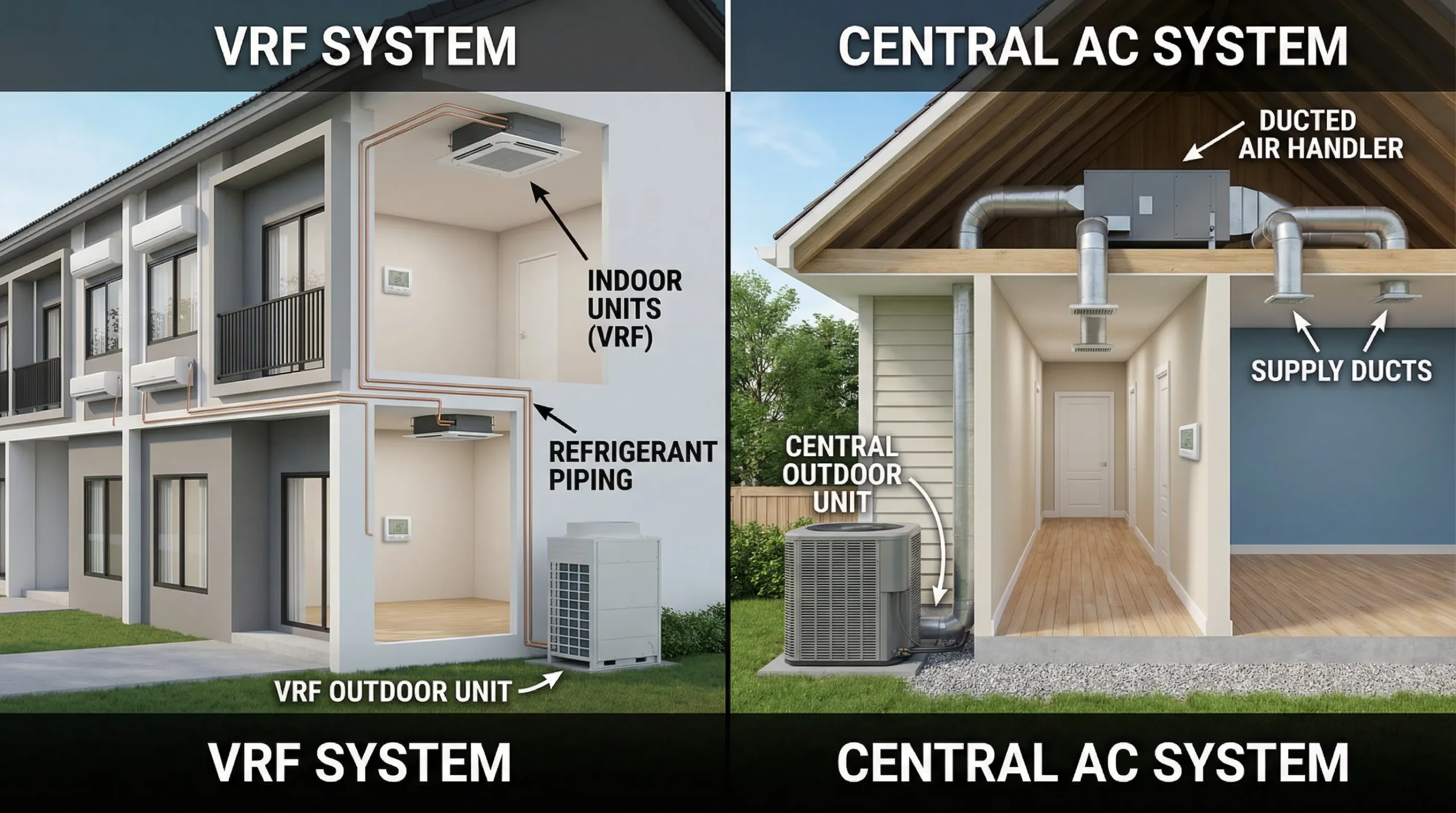
Key differences that matter in VRF vs central AC projects
The vrf vs central ac choice is rarely about one system being “better”. It is about fit for your building type, usage pattern and future plans.
1) Zoning and control
VRF is usually selected for zone level control. This is useful when occupancy changes through the day like cabins, meeting rooms, clinics and mixed use floors.
Central AC can also provide zoning but it typically relies on duct zoning design and dampers. That adds design complexity and needs careful commissioning.
2) Duct space vs piping routes
A central system needs duct routes, ceiling space and access points for servicing. In retrofit projects this can be a constraint.
VRF needs refrigerant piping routes and indoor unit locations. Many projects find piping easier than large ducts in tight ceiling voids.
If your layout needs ducted air delivery for aesthetics you might also consider a Ductable air conditioner as part of the comparison.
3) Part load efficiency in real usage
For many properties the AC is not running at full capacity all day. The vrf vs central ac discussion often comes down to how efficiently each system handles partial occupancy.
VRF systems are designed to modulate capacity across multiple indoor units. Central AC efficiency depends on the specific configuration, control strategy and how well ducts are sealed and insulated.
4) Maintenance approach and downtime planning
Both options need professional preventive maintenance. Filters, coils, drains and electrical checks still matter.
In vrf vs central ac planning, a key difference is how maintenance is scheduled. Central systems concentrate components so one issue can affect larger areas. VRF distributes indoor units across zones so issues can be more localized but you need disciplined service routines.
For planned upkeep and predictable visits many facilities opt for an amc for air conditioner so performance stays stable through peak summer.
Quick comparison table
This table summarizes common decision points for vrf vs central ac selection. Exact outcomes still depend on design quality and correct sizing.
| Decision factor | VRF systems | Central AC systems |
|---|---|---|
| Zone wise control | Strong fit for multi room control | Possible with duct zoning design |
| Space requirements | More piping, less duct volume | Needs duct routes and service access |
| Expansion flexibility | Often easier to scale by zones | Expansion can require duct and plant changes |
| Indoor unit variety | Many indoor unit styles and capacities | Typically fewer airside configurations |
| Best suited usage patterns | Variable occupancy and mixed zones | Large areas with similar schedules |
When VRF is the better fit
In many Chennai commercial projects vrf vs central ac ends with VRF because the building needs room by room control.
VRF is often a strong choice when:
- You have multiple zones with different heat loads like cabins, server rooms, conference rooms and reception
- Occupancy varies across the day and across floors
- You want an easier path to future expansions
If you are ready to evaluate options with a specialist you can consult experienced VRF AC dealers to shortlist configurations based on your floor plan.
When central AC is the better fit
The vrf vs central ac decision can favor centralised systems when you want uniform cooling across large open areas.
Central AC is commonly considered when:
- The building has large open plan zones with similar usage
- You can accommodate ducts and service access during construction
- You want centralized air distribution with consistent diffuser layout
If you are exploring this route it helps to work with established centralised ac dealers in chennai through Techno Power Aircons so duct design, load calculation and commissioning are handled professionally.
Where split ACs and ducted units fit in the same conversation
Sometimes vrf vs central ac is not the final choice. For smaller properties or single floor use cases you may compare a few alternatives.
For apartments and small offices a well sized split system can be the simplest solution. You can explore options from Split Air conditioners when you need fast installation and straightforward maintenance.
For mid sized halls, restaurants and showrooms a ducted setup can deliver uniform airflow without a full central plant. This is where ducted solutions and the vrf vs central ac debate often overlap during design.
Practical tips for making the right choice
A good vrf vs central ac decision starts with load and layout not with tonnage guesses.
First confirm your heat load calculation. Chennai humidity, west facing glazing, kitchen exhaust and occupant density can change requirements significantly.
Next map your usage schedule. If only a few rooms are used at a time VRF zoning can reduce unnecessary cooling. If the whole floor runs together a central approach can be simpler.
Plan the AC supply and installation pathway early. Outdoor unit placement, pipe or duct routes, drain routing and electrical capacity must be coordinated with interiors and civil work.
Latest trends shaping VRF vs central AC decisions in 2026
The vrf vs central air conditioner conversation is increasingly influenced by control and monitoring expectations.
Smart controls and integration are now expected in many commercial projects. Facility teams want scheduling, fault alerts and energy visibility that supports operational discipline.
Indoor air quality is also driving decisions. Fresh air planning, filtration and humidity management are being discussed earlier in the design stage which is where AHU integration may come in for specific buildings.
Finally brand selection matters because service availability and spares support affect long term uptime. For a practical shortlist of major options used locally you can review top ac brands before finalizing your system.
Conclusion: choose what matches your building, usage and support plan
The best vrf vs central ac choice depends on how your building is used, how much zoning you need, what space you have for ducts or piping and how you will maintain the system over time. VRF is often preferred for multi zone flexibility while central AC can suit large areas with uniform schedules.
If you want help comparing vrf vs central ac for your site in Chennai with practical guidance on AC supply, installation planning and after sales support contact Techno Power Aircons. Use the contact us page to share your requirement.
Frequently Asked Questions
What is the main difference in vrf vs central ac?
VRF sends refrigerant to multiple indoor units for zone wise control while central AC cools air at one unit and distributes it through ducts.
Is vrf vs central ac better for offices with cabins and meeting rooms?
VRF is often preferred because different rooms can run at different settings based on occupancy.
Does central AC always require ductwork?
In most traditional central AC designs ductwork is used to move cooled air through the building.
What should I check before choosing vrf vs central ac for my building?
Confirm heat load, usage schedule, available ceiling space for ducts or piping routes, outdoor unit placement and your maintenance plan.
Leave a Reply