
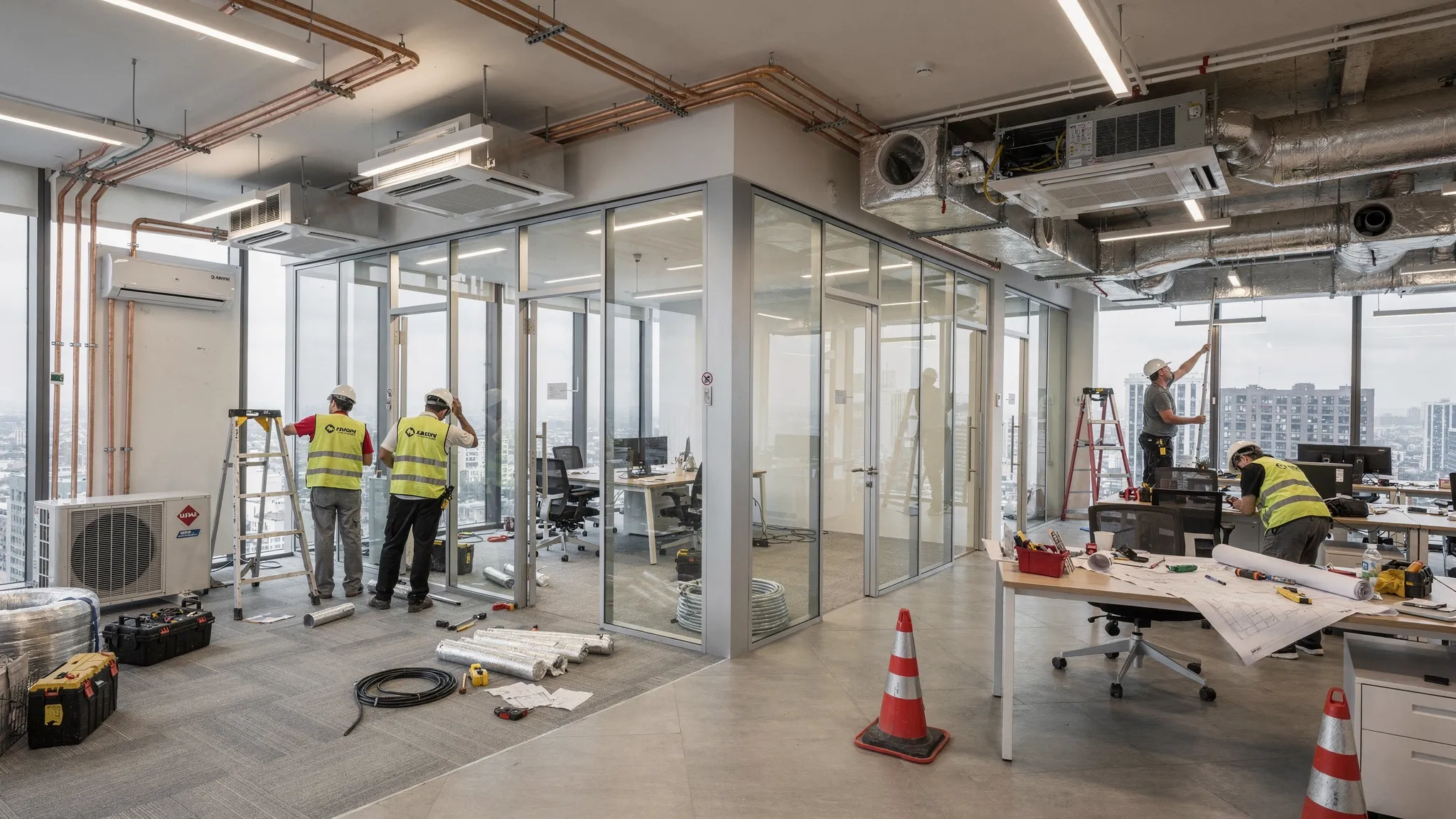
The difference between VRF and ductable AC is the difference between a system that moves refrigerant to multiple indoor units and a system that pushes cooled air through ducts. In simple terms, VRF cools by controlling refrigerant flow while ductable AC cools by distributing air through ducting.
Understanding the difference between VRF and ductable AC matters most in commercial spaces because comfort complaints, electricity bills, ceiling constraints and expansion plans all show up quickly in day to day operations. This guide compares both options from a practical facility and business perspective for offices, clinics, showrooms, restaurants and multi-tenant floors.
You will also see selection tips plus 2026 trends that are shaping commercial HVAC decisions in Chennai.
Difference Between VRF and Ductable AC: Which Is Better for Commercial Spaces?
If you are evaluating commercial cooling in Chennai, start by choosing an experienced partner like Techno Power Aircons because correct system design and installation make a bigger impact than brochure features.
Quick comparison for decision makers
The fastest way to understand the difference between vrf and ductable ac is to compare control, installation needs and how each system handles partial loads.
| Factor for commercial spaces | VRF (VRV) system | Ductable AC system |
|---|---|---|
| Zoning and control | Excellent, indoor units can be controlled zone wise | Moderate, best when zones are fewer or similar load patterns |
| Part load efficiency | Typically strong because capacity can modulate | Can be efficient with good controls but often runs larger air side components |
| Space and interiors | No large ducts for every zone, easier in retrofit | Needs duct routing and false ceiling coordination |
| Best fit | Multiple cabins, meeting rooms, mixed occupancy | Open offices, large halls, uniform cooling areas |
| Expansion | Often easier to add indoor units within design limits | Expansion can mean duct changes and balancing |
| Maintenance focus | Refrigerant circuit health, controls, leak checks | Duct hygiene, airflow balancing, filters, coil cleaning |
What is a VRF system in commercial buildings?
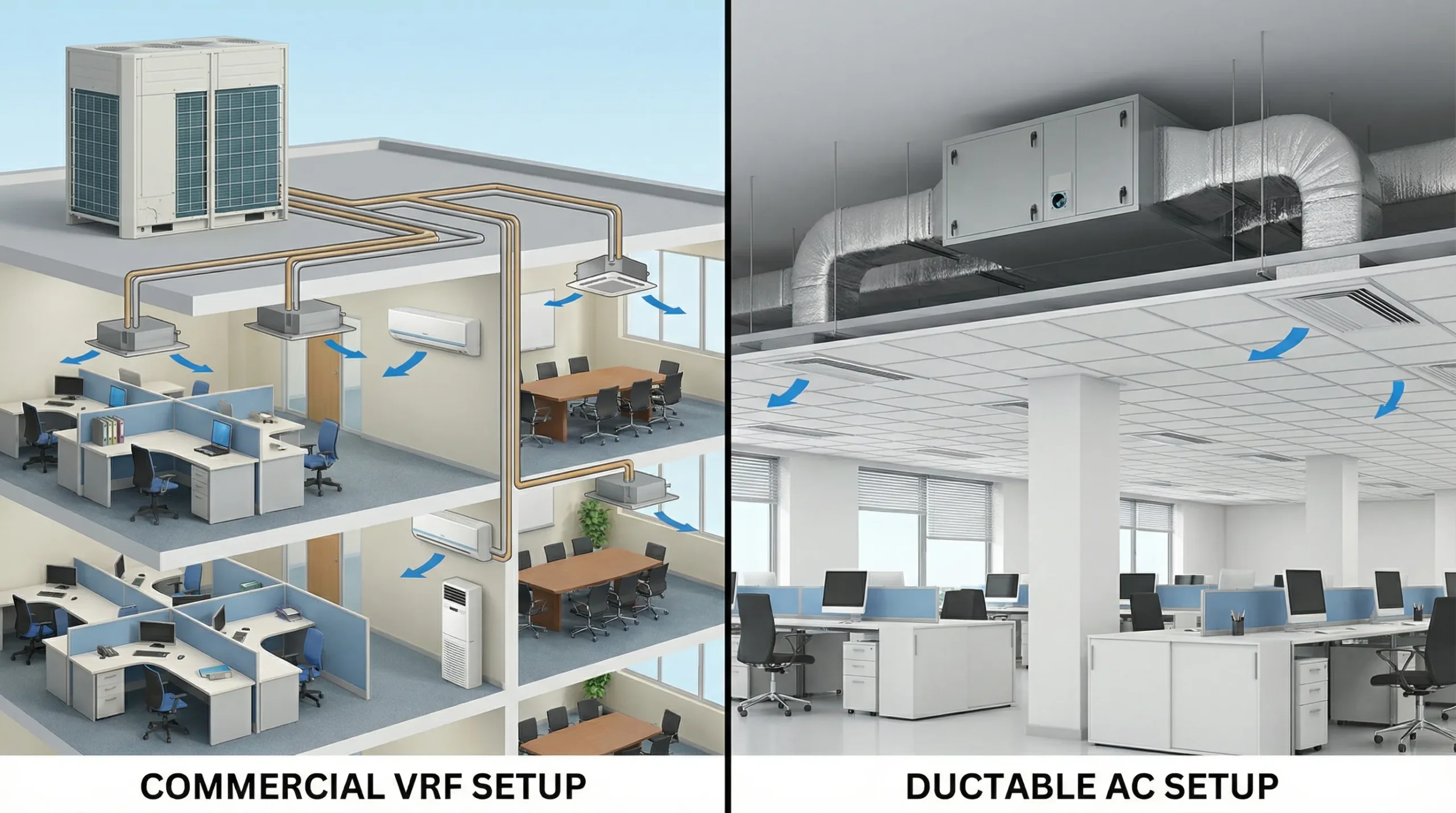
VRF means Variable Refrigerant Flow. It uses one or more outdoor units connected to multiple indoor units through refrigerant piping. Each indoor unit can respond to the local requirement which is why the difference between VRF and ductable AC often shows up as better zone comfort in cabins and meeting rooms.
In the market you will also hear VRV. VRV is a trademark term used by Daikin for VRF type technology, so the concept remains similar for most commercial evaluations.
To explore system options and applications, see VRF, VRV, AHU Air Conditioners in Chennai for an overview of solutions typically used in offices and larger buildings.
Many buyers first shortlist on the basis of product type and air conditioning brands. For Chennai, common commercial choices include Daikin, Mitsubishi Electric, O General, Panasonic, Voltas, Blue Star, Hitachi, LG, Samsung, Carrier, Toshiba, Haier, Whirlpool and Hyundai, but final selection should be based on heat load calculation, after sales strength and site constraints.
If your project brief is specifically for VRF systems, this page on VRF Air conditioners helps you understand where VRF fits compared to other commercial categories.
What is a ductable AC system?
A ductable AC (also called ducted AC) typically uses one indoor unit connected to ducts that carry cooled air to multiple diffusers. In commercial spaces, the difference between VRF and ductable AC becomes clear when you look at ceiling coordination: duct routing, diffuser layout, return air paths and access panels must be planned early.
If you are considering this route, start with the product basics at Ductable air conditioner so you can align expectations on installation and maintenance needs.
Ductable systems can be a strong choice for open plan areas where one setpoint and consistent airflow works well. They can also support cleaner aesthetics because only diffusers are visible.
The real difference between vrf and ductable ac in commercial spaces
1) Comfort and zoning
The biggest difference between vrf and ductable ac is zoning flexibility. VRF is designed for multiple zones with different cooling needs, for example a server room, a conference room and cabins on one floor.
Ductable AC can also be zoned with dampers and controls, but zoning complexity increases design effort and balancing effort. For many sites it is best when zones are fewer and usage is similar.
2) Energy performance in Chennai conditions
In Chennai, cooling runs long hours, humidity loads are real and partial occupancy is common in offices. This is where the difference between vrf and ductable ac often impacts operating cost: VRF systems can modulate capacity to match demand.
3) Installation, retrofit and ceiling constraints
If you are retrofitting an existing office or clinic, the difference between vrf and ductable ac can be the deciding factor because adding ducts in an already packed ceiling can be difficult.
VRF piping still needs planning, drainage routes and electrical coordination, but it can reduce the amount of bulky ductwork across multiple zones.
4) Noise and aesthetics
Both systems can be quiet when engineered correctly. The difference is mostly about where noise sources sit and how airflow is distributed. Ductable AC can keep the indoor unit away from occupied areas, while VRF indoor units vary by type and placement.
5) Scalability and future expansion
For growing businesses, the difference between VRF and ductable AC shows up when you add cabins, change partitions or expand to a neighbouring suite. VRF can be planned for expansion within system limits.
Ductable expansion can involve duct modifications and air balancing to avoid hot spots.
Which is better for commercial spaces?
There is no one answer, but there is a clear way to decide based on how your space is used.
Choose VRF when your building needs zone wise control
If your floor has many enclosed rooms with different timings, VRF usually wins because the difference between VRF and ductable AC directly supports independent control and comfort. It is also popular in premium offices, multi tenant floors and mixed use buildings.
To shortlist qualified support, work with experienced VRF AC dealers who can size correctly and coordinate commissioning.
If you are specifically looking for VRF and VRV expertise in your project planning stage, connect with VRF/VRV AC Dealer resources so your selection is aligned with the building layout and service access.
Choose ductable AC when you have large open areas
For open plan offices, training rooms, banquet zones or retail floors where uniform cooling is acceptable, ductable AC can be an efficient solution. In these cases the difference between vrf and ductable ac is less about control and more about airflow design, diffuser placement and duct insulation quality.
When you want local support for supply and installation, speak to a specialist Ductable ac dealer in Chennai to coordinate duct design and equipment selection.
Many buyers also compare vendor depth by looking at top ductable ac dealers in chennai options and evaluating site visit quality, commissioning approach and service response.
Consider a hybrid approach for mixed layouts
Some commercial floors work best with a mix, for example VRF for cabins and ductable for a large hall. The key is to evaluate the difference between vrf and ductable ac in terms of control needs, hours of usage and how often layouts change.
Practical buying tips for Chennai projects in 2026
The difference between vrf and ductable ac is important, but these checks prevent expensive surprises later.
Start with correct tonnage and zoning using a heat load calculation. Oversizing causes short cycling, poor humidity control and higher wear.
Confirm your maintenance plan before purchase. For commercial spaces, preventive service schedules matter as much as the equipment choice.
Ask your dealer about indoor unit types that match interiors and usage patterns. Even within VRF, choosing the right indoor unit style affects comfort and noise.
Where Techno Power Aircons fits in your evaluation
If you are searching for an established AC dealer in Chennai with commercial experience, Techno Power Aircons has been serving Chennai since 1982 with sales, installation and after sales support.
For teams that are finalising product selection, visiting the best ac showroom in chennai can help you compare options across budgets and understand what installation will look like in your space.
If your shortlist includes Daikin for commercial applications, review Daikin Ductable AC solutions and confirm suitability based on zoning, pipe runs or duct routing.
For smaller cabins or add on rooms connected to the main office, you may also evaluate Split Air conditioners as a practical complement depending on layout.
If you are comparing vendors for supply and installation support, this page for Split AC dealers can be useful when the space requirement is not large enough for centralised solutions.
Budget is real for most businesses, so if you need to balance performance with cost, explore Low price AC in Chennai and then validate lifecycle cost rather than only upfront price.
If your priority is to compare air conditioning brands suitable for Chennai heat, use this guide on best ac brand in chennai to build a shortlist based on durability, efficiency and service support.
For brand comparisons and quick shortlisting, you can also check top 10 ac brands in chennai and align it with your commercial requirement.
If you want a broader view while finalising vendors, review this overview of top ac brands to see which ones have strong support in Chennai.
If you are searching specifically by location availability and support strength, this resource on ac brands in chennai is a good checkpoint before you lock the purchase order.
Maintenance planning: the part many teams forget
For commercial uptime, plan for filters, belts if applicable, sensors and controls plus periodic deep cleaning. The difference between vrf and ductable ac also shows up here because VRF maintenance focuses on refrigerant circuit integrity, while ductable systems demand consistent airflow hygiene and duct cleanliness.
When your system needs repair, using genuine components protects efficiency and reliability. Keep a dependable source for ac spare parts in chennai on your vendor list.
It also helps to have a known supplier network for ac spare part dealers in chennai so critical sites do not lose time on compatibility issues.
For predictable budgeting and preventive care, many offices prefer an annual contract. Explore an amc for air conditioner so breakdown risk and seasonal performance drops are managed proactively.
Conclusion: picking the right system for your building
The difference between vrf and ductable ac comes down to how you want to control comfort: VRF is usually better for multiple zones with varying usage, while ductable AC is often ideal for large open spaces that need uniform airflow.
To choose well, prioritise heat load calculation, ceiling coordination, service access and a maintenance plan. When you get these right, either system delivers reliable commercial cooling in Chennai.
For project guidance, product selection and professional installation, reach out to Techno Power Aircons and contact us to plan the best solution for your commercial space.
Frequently Asked Questions
What is the main difference between VRF and ductable AC?
The key difference is the distribution method. VRF distributes refrigerant to multiple indoor units for zone wise control, while ductable AC distributes cooled air through ducts from a central indoor unit.
Which is better for an office with many cabins and meeting rooms?
VRF is usually better because it supports independent temperature control across multiple rooms, which improves comfort and reduces waste in unused zones.
Which is better for a large open plan office floor?
Ductable AC can be a strong choice for large open areas because it can deliver uniform airflow with fewer visible indoor units.
Is VRF always more energy efficient than ductable AC?
Not always. VRF often performs well at partial load, but actual efficiency depends on correct sizing, control strategy, installation quality and maintenance.
What maintenance should commercial spaces plan for?
Plan for periodic filter cleaning, coil cleaning, drain line checks, electrical inspections and scheduled professional servicing. Ductable systems also need airflow checks and duct hygiene, while VRF needs refrigerant circuit health checks.
Leave a Reply