

A VRV ductable unit is a duct-connected indoor air conditioning unit that runs on VRV or VRF technology to deliver controlled cooling to multiple spaces. In simple terms it is a ducted AC indoor unit that adjusts refrigerant flow so cooling matches the real demand in each zone.
In this guide we compare the VRV ductable unit with conventional ducted AC systems used in homes offices and commercial buildings in Chennai. We will answer the questions people actually ask before buying so you can choose the right comfort level efficiency and long term serviceability. If you want expert help from a local team you can also speak with Techno Power Aircons for selection installation and after sales support.
What is the difference between a vrv ductable unit and a conventional ducted AC system?
A VRV ductable unit is typically part of a VRV or VRF system where an inverter driven outdoor unit varies refrigerant flow to one or more indoor units. That helps it run efficiently at partial load which is how most buildings operate.
A conventional ducted AC system usually means a fixed capacity or staged DX ducted system or a chilled water based setup where the supply air is distributed through ducts. It can be effective for uniform cooling but it is often less flexible when zoning needs change.
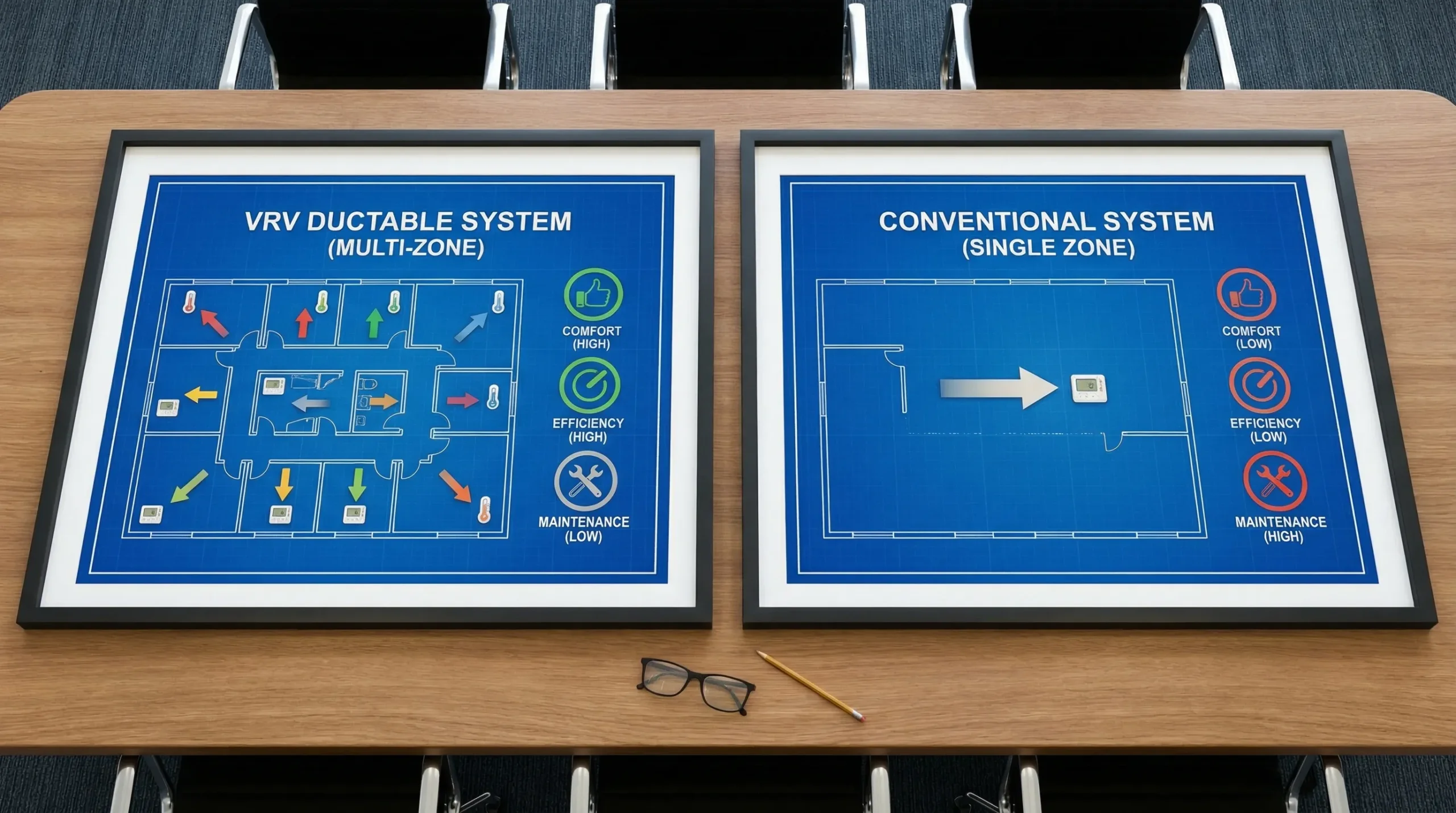
Here is a quick comparison you can screenshot and share with your architect or contractor.
| Decision factor | vrv ductable unit | Conventional ducted AC system |
|---|---|---|
| Capacity control | Variable capacity to match demand | Often fixed or limited staging |
| Zoning | Strong zone wise control when designed correctly | Possible but usually needs more dampers and controls |
| Comfort | Stable temperatures and quieter part load operation | Can see temperature swings if oversized |
| Renovation impact | Refrigerant piping can be easier than large duct trunks in some sites | Duct routing can be bulkier in tight ceilings |
| Best fit | Multi room apartments villas offices clinics | Large open halls uniform zones select industrial use cases |
Which option feels better in real Chennai conditions like heat humidity and coastal air?
For many Chennai homes and offices comfort is about more than just temperature. Humidity control stable airflow and low noise matter just as much.
A VRV ductable unit usually performs well when occupants move between rooms during the day. Bedrooms can stay comfortable at night while living areas can reduce load automatically.
A conventional ducted AC system can still feel great in a single large zone like a banquet hall or an open plan office where everyone needs the same setpoint.
Is a vrv ductable unit better for energy efficiency than conventional ducted systems?
Most buyers ask this because electricity consumption is a major concern during Chennai summers.
In many real world buildings a VRV ductable unit can be more energy efficient because it modulates capacity instead of cycling on and off at full load. This is especially useful when:
- Different rooms have different occupancy schedules
- The building has solar heat gain peaks in the afternoon
- You want comfort across multiple small zones
Conventional ducted systems can be efficient too but the design must be very accurate. If the system is oversized it may short cycle and remove less humidity.
Latest trend in 2026: more projects are combining VRV or VRF zoning with smarter controls so the system runs closer to actual demand through the day.
What are the installation differences you should know before choosing?
A good comparison is not only about the machine. It is also about whether your site can accommodate ducts piping drainage access panels and service clearances.
Does a vrv ductable unit need less ceiling space?
Not always. A VRV ductable unit still needs ducting for supply and return plus insulation and a drain line. However it can reduce the need for very large duct trunks if you design multiple smaller duct runs for zones.
Does a conventional ducted AC system need more ductwork?
Often yes especially when one central indoor unit serves many rooms. That can increase ceiling depth requirements. It can also increase duct leakage risk if workmanship is poor.
Practical tip for Chennai sites: always insist on proper duct insulation and vapor barrier sealing. Poor insulation is a common reason for sweating ducts and indoor humidity issues.
Which system is easier to maintain over the long term?
Maintenance depends on filtration coil cleanliness drain slope electrical health and correct refrigerant charge.
A vrv ductable unit needs periodic professional checks for refrigerant parameters electronics and indoor unit airflow. It is important to work with a specialist team familiar with VRV or VRF controls.
Conventional ducted systems need strong duct hygiene practices. Filters and return air paths must stay clean or airflow drops and coil icing may occur.
If you want dependable spares and verified compatibility you can refer to AC spare parts in Chennai when you are planning long term upkeep.
For predictable servicing many building owners also choose an amc for air conditioner so preventive checks happen before peak summer.
When should you choose a vrv ductable unit for your project?
Choose a vrv ductable unit when your priority is room wise comfort with good efficiency and you want the system to adapt to changing usage.
It is commonly a strong fit for:
- Premium apartments and villas with multiple bedrooms
- Clinics and labs where different rooms need different schedules
- Office floors with meeting rooms cabins and open areas
- Retail where occupancy varies through the day
If you are exploring ducted options in general start with this overview of a Ductable air conditioner and then narrow down the system type.
When does a conventional ducted AC system make more sense?
A conventional ducted AC system can be a good choice when the space behaves like one large zone and the usage pattern is consistent.
It is often used in:
- Large halls
- Auditoriums
- Certain industrial or process spaces where the load is steady
It can also suit projects where the building already has existing duct infrastructure and you are replacing equipment without changing zoning.
Can a vrv ductable unit work like a central air conditioning system for home?
Yes in many cases a vrv ductable unit can deliver a centralised feel because air is distributed through ducts and diffusers across rooms.
If you are planning a central air conditioning system for home in Chennai focus on design details more than brand brochures. Pay attention to:
- Heat load calculation for each room
- Return air sizing for low noise
- Fresh air provision where required
- Condensate drainage slope
A well designed central air conditioning system for home can be achieved with both approaches but VRV or VRF based ducted setups often offer finer control for bedrooms and studies.
What should you ask your dealer before finalising the system?
These questions prevent most post installation complaints.
What is the zoning plan and control strategy?
For a vrv ductable unit ask how thermostats and zone controls will be mapped. Confirm how the system behaves if only one room needs cooling.
Where will service access panels be placed?
Servicing should not require breaking the ceiling. Good access planning matters for both VRV based ducted units and conventional ducted systems.
What indoor air quality approach is planned?
In 2026 many buyers are prioritising filtration and ventilation. Ducted systems can support better filtration but only if the return and filter sections are designed for low pressure drop.
What are the latest trends in ducted cooling systems in 2026?
Here are practical trends we are seeing in Chennai projects.
1. Smarter controls that reduce wasted runtime
A vrv ductable unit paired with scheduling and occupancy based settings helps reduce overcooling in guest rooms meeting rooms and cabins.
2. Better duct design for quieter bedrooms
Many modern homes want ducted comfort with low noise. That pushes the market toward larger return grilles better acoustic lining and correct diffuser selection.
Where can you explore the right products and dealers in Chennai?
If you want to compare systems beyond just ducted models this guide to VRF, VRV, AHU Air Conditioners in Chennai helps you understand where each technology fits.
If you specifically want a specialist for VRV or VRF selection and support connect with VRF/VRV AC dealers in Chennai to discuss layout constraints and zoning.
Many buyers also search broadly for VRF AC dealers when planning multi zone projects across floors.
For ducted equipment selection and installation support in the city you can also consult a Ductable AC Dealer in Chennai.
Which brands should you shortlist for a vrv ductable unit setup?
Brand suitability depends on your building size zoning complexity service network and availability of trained technicians.
In Chennai common shortlists include Daikin Mitsubishi Electric O General Panasonic Voltas Blue Star Samsung LG Hitachi Carrier Toshiba Haier Whirlpool and Hyundai.
To compare options in one place you can review top ac brands in chennai.
If your shortlist is still wide you can also check top ac brands based on Chennai weather needs like humidity handling and coastal durability.
Many homeowners start with the question of the best ac brand in chennai and then decide the right system type.
If you want a quick shortlist format you can scan top 10 ac brands in chennai and then ask your dealer which brands offer the right ducted indoor unit models.
You can also compare ac brands in chennai based on after sales readiness for advanced systems.
What about showroom support availability and spares in the future?
Buying the right system is easier when the dealer supports selection installation commissioning and service coordination.
If you want a trusted local partner start with Techno Power Aircons as an AC dealer in Chennai with long experience in Chennai projects.
Many customers also prefer visiting the best ac showroom in chennai to compare ducted indoor unit sizes remote options and grille selections in person.
For buyers with strict budgets or immediate replacement needs it can help to explore options like Low price AC in Chennai and then confirm whether ducted solutions are appropriate for your ceiling and layout.
For service readiness it is useful to keep a spare plan and supplier contact for ac spare part dealers in chennai especially for high usage commercial sites.
Quick decision checklist: which one should you choose?
If you want a one line answer.
Choose a vrv ductable unit when you want zoning flexibility stable comfort and good part load efficiency.
Choose a conventional ducted AC system when you have a large uniform zone or existing duct infrastructure and you prefer a simpler control approach.
Conclusion: what should you do next?
A VRV ductable unit is usually the better choice when your home or office needs zoning flexibility consistent comfort and efficient partial load operation. Conventional ducted AC systems still make sense for large uniform spaces or retrofit projects with existing ducts.
If you are planning a ducted upgrade in Chennai the best next step is a site visit and a proper heat load and duct design review.
For selection installation commissioning and after sales support in Chennai connect with Techno Power Aircons and contact us.
Frequently Asked Questions (FAQ)
Is a vrv ductable unit suitable for apartments in Chennai?
Yes if the ceiling height allows duct routing and the design includes correct zoning return air and insulation for humidity control.
Do conventional ducted AC systems provide uniform cooling?
They can provide very uniform cooling in large single zones but comfort can drop if the system is oversized or ducts are poorly sealed.
Can I convert an existing ducted setup to a vrv ductable unit?
Sometimes yes if duct condition is good and there is space for refrigerant piping and drain routing but a site survey is necessary.
Which option is better for a central air conditioning system for home?
Both can work but a VRV or VRF based ducted approach is often chosen for room wise control in modern multi room homes.
What maintenance should I plan after installation?
Plan regular filter cleaning coil checks drain inspection electrical tightening and periodic professional servicing especially before summer peak usage.
Leave a Reply