
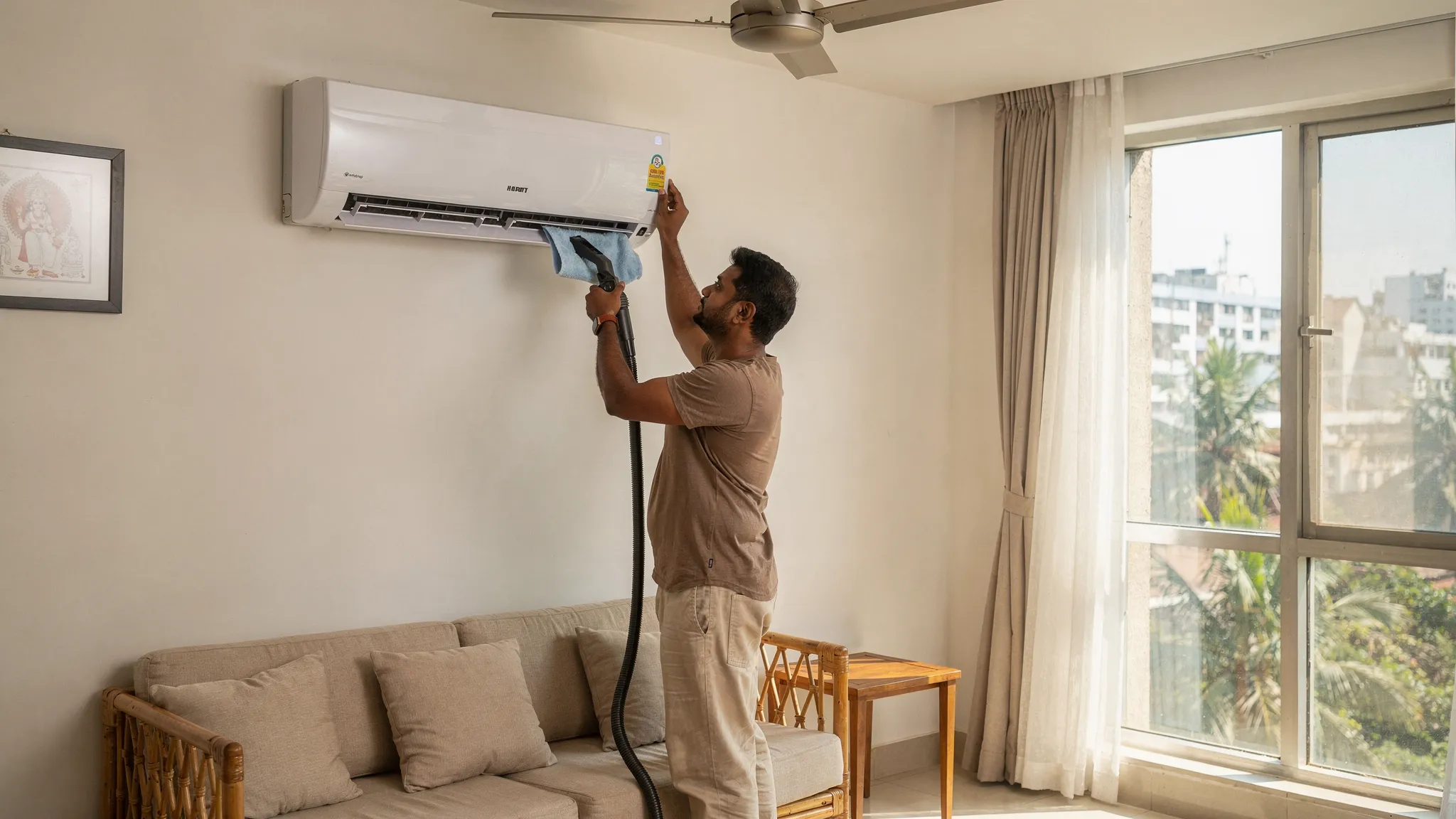
Keeping your AC in good shape in Chennai is not only about comfort, it is also about steady cooling, lower electricity bills and fewer mid-summer breakdowns. The good news is you do not need to be a technician to do basic air conditioner maintenance checks every month. A few simple tasks help your unit breathe better, drain properly and run with less strain.
Below is a practical monthly checklist you can follow for most home ACs like split AC and window AC. For many office systems like cassette AC and ductable AC units need clear guidance on what you should not attempt yourself.
Before you Start: Safety and What to Avoid
Monthly DIY maintenance should be safe, light and non-invasive.
- Switch off power: Turn off the AC from the remote, then switch off the MCB/isolator. For window ACs, unplug if accessible.
- Protect your warranty: If your unit is under warranty, avoid opening sealed panels or tampering with wiring.
- Do not handle refrigerant: Any gas top-up, leak test, brazing or pressure work must be done by a qualified HVAC technician.
- Do not pressure-wash coils: High-pressure water can bend fins and force water into electrical parts.
If you ever smell burning, see sparks or the breaker trips repeatedly, stop and call a professional.
The Monthly AC Maintenance Checklist
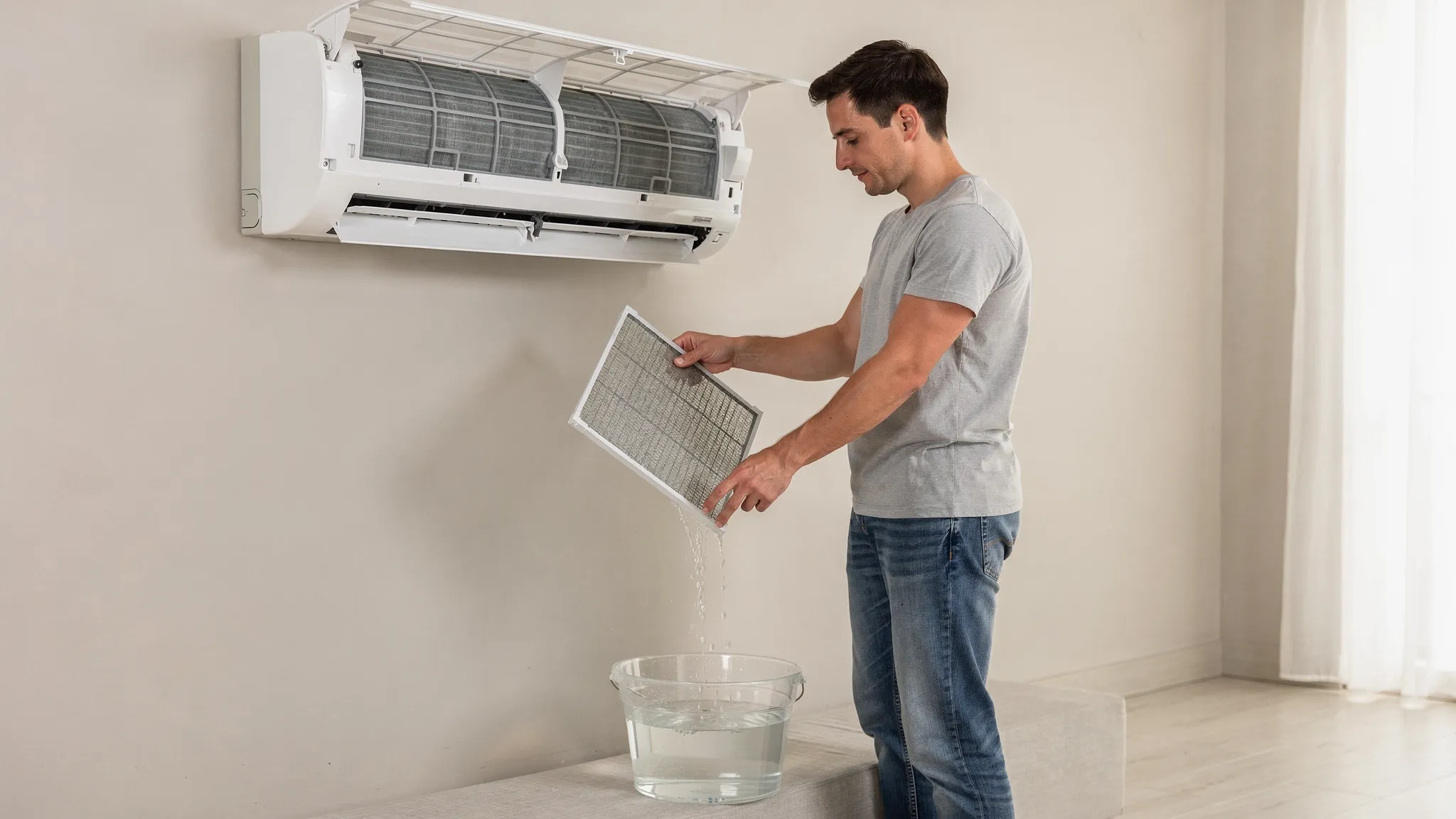
1) Clean the indoor unit air filters
A clogged filter is one of the most common reasons for weak airflow, poor cooling and higher power consumption.
What to do
- Open the front panel.
- Remove the mesh filters.
- Vacuum first (reduces sludge).
- Wash with clean water and a mild soap if needed.
- Dry fully in shade before refitting.
If your home is near a main road, construction area or the coast (salt + dust), filters may need cleaning more often than monthly.
2) Check airflow and cooling at the vents
This is a quick health check you can do after cleaning the filters.
What to look for
- Airflow feels strong and consistent
- No whistling from blocked vents
- Cooling feels normal within 10 to 15 minutes
If not: Weak airflow even with clean filters often indicates deeper dust on the evaporator coil (indoor coil) or blower wheel, which typically needs professional cleaning.
3) Inspect for water leakage and clear the drain path
In humid weather, your AC removes moisture. That water must drain smoothly.
What to do
- Look for dripping from the indoor unit, wet patches on the wall or water marks.
- If your model has an accessible drain pipe section, ensure it is not kinked or pinched.
- If you can safely access the drain outlet, confirm that water can flow out when the AC runs.
What not to do
- Do not open sealed drain trays or dismantle the unit body if you are unsure.
4) Smell check: catch mould or dirty sock odour early
A musty smell can come from moisture + dust on the indoor coil or blower.
What you can do monthly
- Clean filters.
- Run Fan mode for 15 to 30 minutes occasionally to reduce dampness.
- Keep doors/windows closed while cooling to reduce moisture load.
If smell persists even after filter cleaning, it is usually time for a deeper indoor-unit clean.
5) Clean around the indoor unit
Your AC needs free air return.
Do this
- Keep curtains, furniture and tall cupboards away from the indoor unit air path.
- Dust the intake area and surrounding wall.
- Ensure the louvers are not blocked and swing freely.
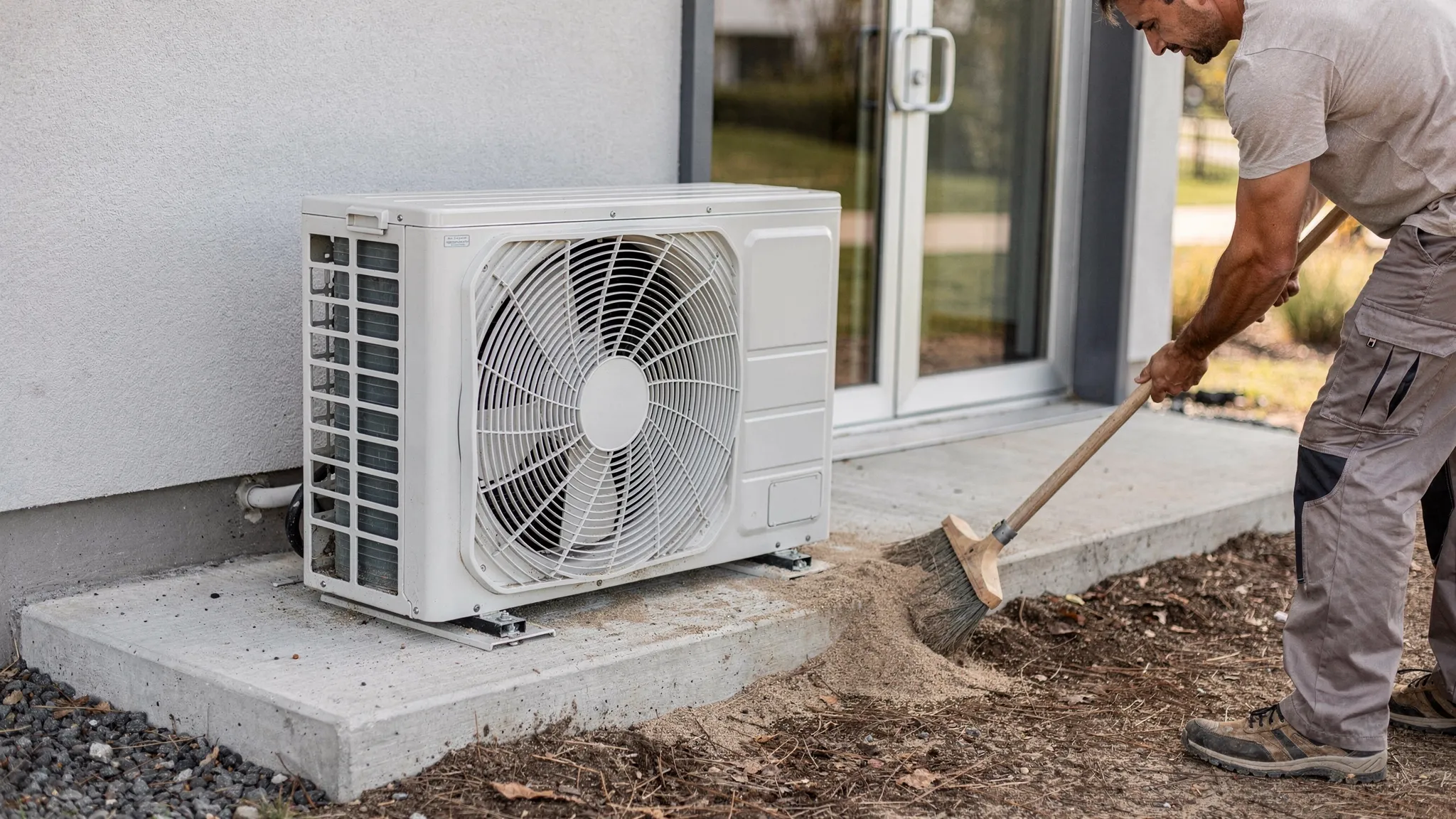
6) Outdoor unit housekeeping (split ACs)
The outdoor unit releases heat. If it is choked, your AC struggles.
What to do
- Clear leaves, plastic covers and debris around the unit.
- Maintain clearance around the unit as per the manufacturer’s guidance.
- Gently brush dust off the outer surface.
- If there is visible dust on the fins, you can use light water flow (not pressure) from a distance avoiding the electrical side.
7) Quick electrical and vibration check
Electrical issues should be handled by professionals, but you can still spot warning signs.
Look for
- Damaged insulation on the power cable
- Loose or scorched plug points (window ACs)
- Unusual vibration or rattling from the outdoor unit
Action: If anything looks burnt, melted or smells like overheating, switch off and call a technician.
8) Remote settings that reduce monthly wear and power use
Many complaints are actually settings problems.
Good monthly habits
- Set temperature around 24 to 26°C for comfort and efficiency (adjust based on your room and humidity).
- Use Sleep mode at night.
- Prefer Auto fan in many cases to balance airflow and noise.
- Avoid frequent on-off cycling every few minutes, it stresses components.
AC Maintenance Plan at a Glance
| Task | What you need | Time | DIY risk level | Notes |
|---|---|---|---|---|
| Clean indoor filters | Water, mild soap, soft cloth | 15 to 30 min | Low | Let filters dry fully before refitting |
| Check airflow and cooling | None | 5 min | Low | Weak airflow after filter cleaning may need service |
| Inspect drain outlet and leakage | Torch/phone light | 5 to 10 min | Low | Humidity can cause frequent drain clogs |
| Indoor odour check | None | 1 min | Low | Persistent odour often needs deep cleaning |
| Clear indoor airflow path | Duster | 5 to 10 min | Low | Keep return air area open |
| Clear outdoor-unit surroundings | Broom/brush | 10 min | Low to Medium | Avoid water near electrical section |
| Visual cable and vibration check | None | 2 min | Low | Do not open panels |
Problems You Should not Ignore
| Symptom | Common causes | What you should do |
|---|---|---|
| AC is running but not cooling well | Dirty coil, low refrigerant, airflow restriction | Clean filters first, then book a service visit |
| Indoor unit leaking water | Drain blockage, improper slope, dirty coil causing icing | Switch off, check visible drain line, call a technician if it continues |
| Ice on indoor coil or copper pipe | Airflow issue, low gas, sensor issues | Switch off and arrange professional inspection |
| Breaker trips / burning smell | Electrical fault, loose connection, capacitor issues | Stop using immediately and call a professional |
| Outdoor unit very noisy | Fan issue, mounting vibration, coil obstruction | Clear debris, if noise remains book service |
How Tasks Change for VRF/VRV and Commercial Systems
If you are in an office, clinic or showroom using VRF/VRV, the principle is the same but access and safety are different.
Safe monthly tasks for many VRF/VRV indoor units
- Clean return-air filters (as per the indoor unit design)
- Keep supply and return vents unobstructed
- Note and report any error code shown on wired controllers
- Listen for abnormal noise and check for water stains near drain outlets
Avoid: Opening control panels, working at height without proper access equipment or attempting any refrigerant-side checks.
For VRF/VRV setups, professional preventive maintenance becomes more important because multiple indoor units and controls are interconnected. Techno Power Aircons, the best AC dealer in Chennai as well as top AC spare part dealers in Chennai supports VRF/VRV maintenance and repair. Being the best VRF/VRV AC Dealer In Chennai, our expert team ensures reliable performance and long-term efficiency for your VRF/VRV systems.
When Basic Monthly Maintenance is Not Enough
Monthly maintenance helps, but it does not replace periodic professional servicing, especially in Chennai’s dust and humidity. Learn more about how to maintain AC in Chennai extreme weather for better performance and longer lifespan.
You should plan a professional visit if:
- Filters get dirty very quickly (possible indoor coil buildup)
- Cooling performance has dropped compared to last season
- There is repeated water leakage
- The outdoor unit is exposed to heavy dust, sun or salty air
- Your space uses cassette, ducted, VRF or VRV systems
If you want to understand what a thorough service typically includes, this checklist-style guide of Bluestar AC service checklist: what to expect from a professional service visit can help you.
Need Help with AC Servicing or an AMC in Chennai?
If you would like a professional to handle deep cleaning, performance checks or ongoing preventive care, Techno Power Aircons in Chennai provides sales, installation and after-sales support, including AC AMC in Chennai and maintenance support for VRF/VRV systems.
Contact us today for expert AC servicing, reliable AMC in Chennai and complete AC maintenance support you can trust.
Frequently Asked Questions
How often should I clean my AC filter in Chennai?
In many Chennai homes, monthly is a good baseline. If your home faces a busy road, ongoing construction or you run the AC for long hours daily, you may need to clean it every 2 to 3 weeks.
Can I wash the outdoor unit with water?
You can do light cleaning around the unit and gentle rinsing on the coil surface if you can avoid the electrical section and do not use pressure. If the coil is heavily clogged or greasy, professional cleaning is safer and more effective.
Why is my AC leaking water even after cleaning the filter?
Common reasons include a partially blocked drain line, incorrect drain slope or icing due to coil issues. If leakage repeats, book a service visit to prevent wall damage and mould.
What temperature setting is best for comfort and efficiency?
Many households find 24 to 26°C comfortable when paired with a fan. The ideal setting depends on insulation, sunlight, occupancy and humidity.
My AC cools fine. Do I still need professional maintenance?
Yes, because issues like coil buildup, drain slime and electrical wear often start quietly. Preventive servicing helps maintain efficiency and reduce breakdown risk.
Do these monthly tasks apply to VRF/VRV systems too?
Yes for basic tasks like cleaning accessible filters and checking for leakage or error codes. For deeper maintenance, VRF/VRV systems should be handled by trained HVAC professionals.
Leave a Reply