
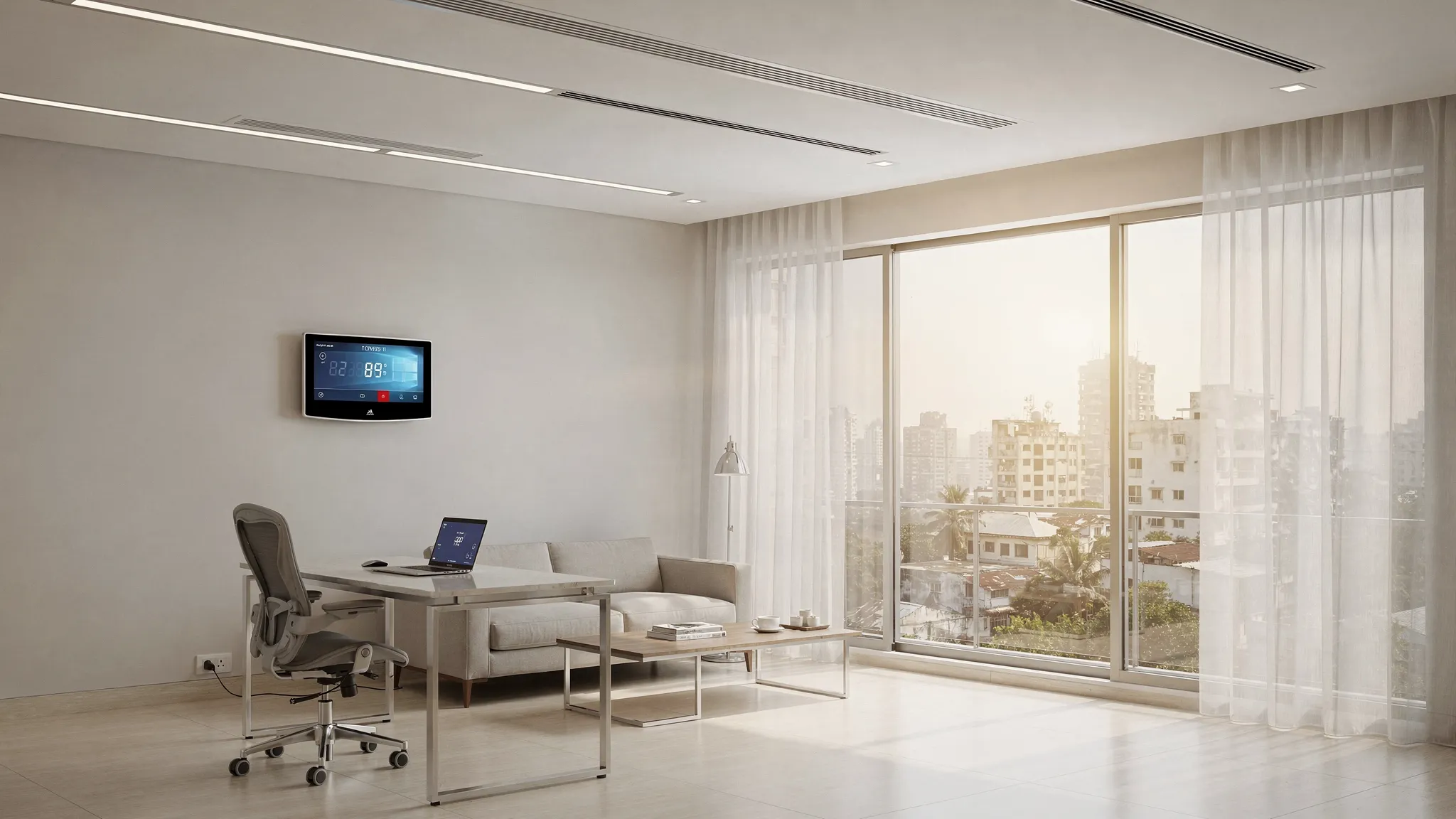
Chennai’s heat and humidity make year round cooling more than a luxury. If you are renovating, building or tired of managing multiple wall units, a central air conditioning system can deliver quiet, even comfort across your entire home or office with a single, well planned installation. This blog explains how central AC works, the main system types used in India, what to consider for Chennai’s climate and how to get started with sizing, design, installation and maintenance.
What is a Central Air Conditioning System?
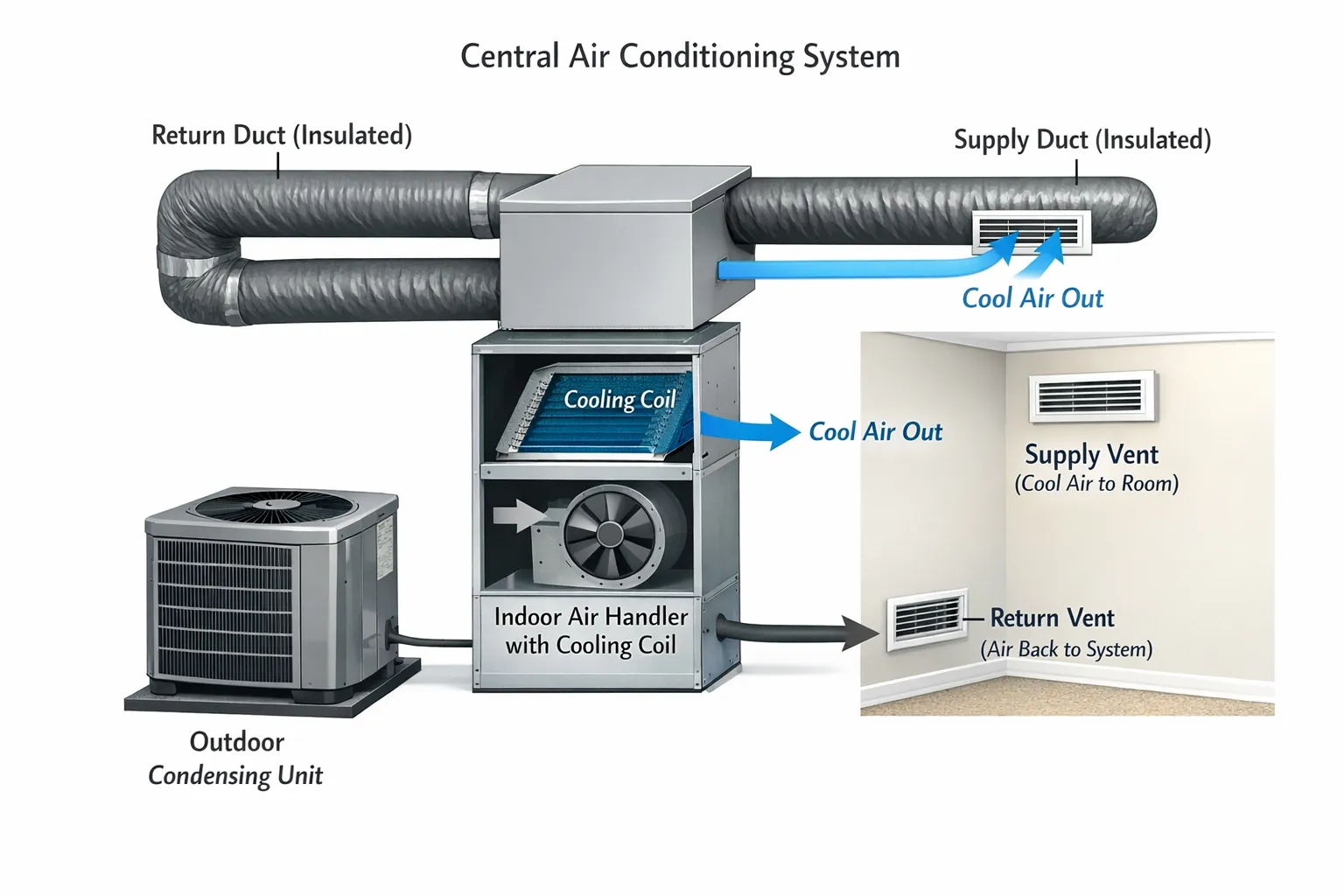
A central air conditioning system cools and dehumidifies air at a single location, then distributes it through ducts or multiple connected indoor units to many rooms. Instead of installing separate split ACs in every room, you get one coordinated system, one set of controls and uniform comfort.
The core parts are simple to understand:
- Outdoor unit, houses the compressor and condenser that release heat outside.
- Indoor air handler or AHU, contains the cooling coil and blower that push air across ductwork.
- Ducts, insulated channels that carry supply air to rooms and return air back to the air handler.
- Thermostat and controls, set temperature schedules, enable zoning and integrate with smart controls or a building management system in commercial projects.
- Filtration and fresh air, return air filters protect your coil and a fresh air provision improves indoor air quality when designed correctly.
Central AC Options Commonly Used in India
There is no one size fits all. The right central AC for a Chennai apartment, villa, clinic, showroom or office depends on layout, ceiling space, electrical load and budget.
| System type | How it works | Best for | Advantages | Considerations |
|---|---|---|---|---|
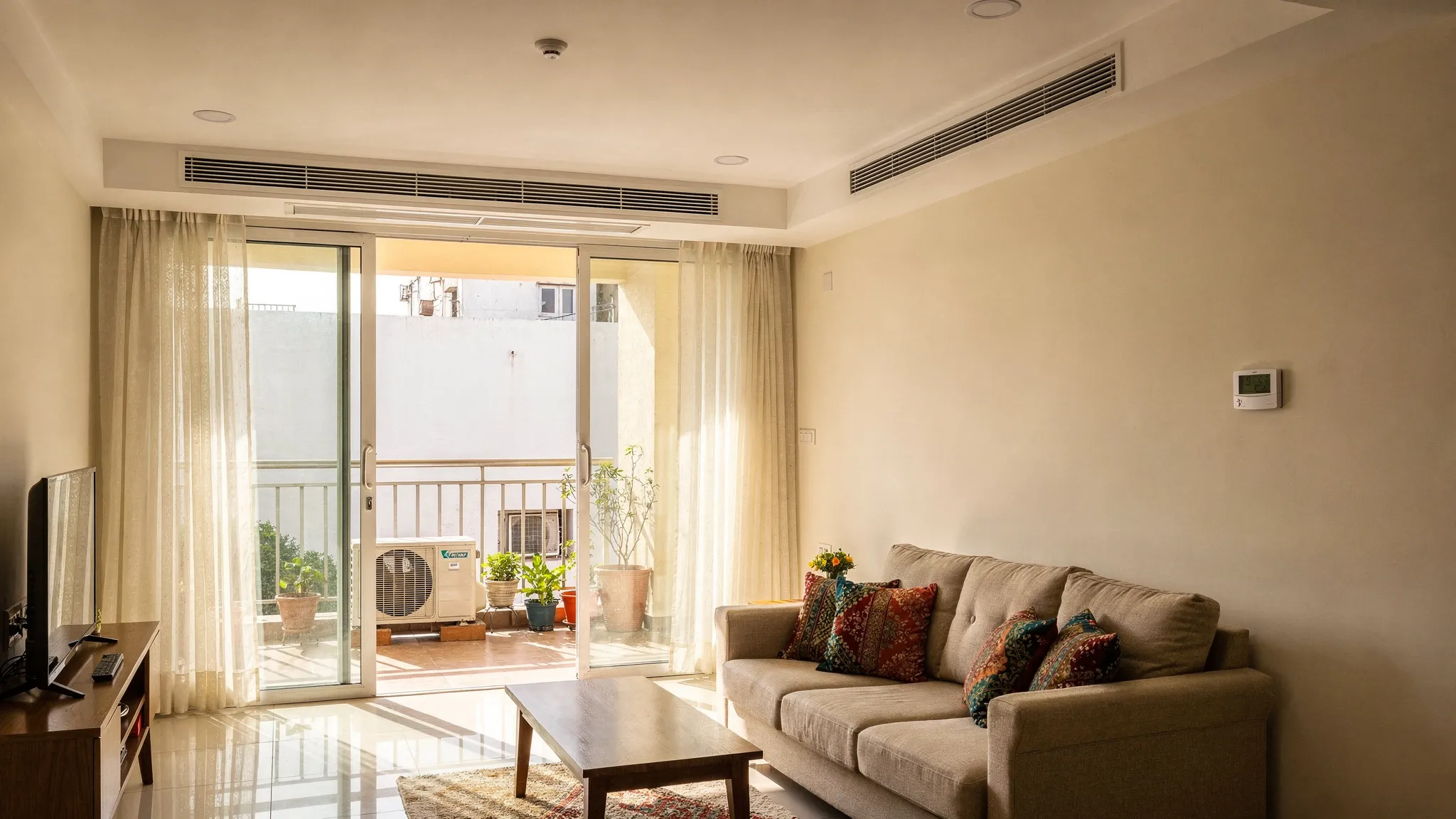
| Ducted split central AC | One outdoor unit connects to an indoor air handler that feeds multiple rooms via ducts | Apartments, villas, small offices with false ceilings | Clean look, even airflow, quiet operation, single point of maintenance | Requires ceiling space for ducts, design and balancing are important |
| Packaged rooftop unit | All major components in one cabinet, supply and return ducts connect directly | Retail floors, restaurants, halls, gyms | Fast to install, easy service access, robust airflow | Needs roof space, duct insulation must be high quality |
| VRF or VRV multi zone system | One or more inverter driven outdoor units connect to many compact indoor units, each room is its own zone | Villas, multi floor homes, clinics, offices, hotels | Excellent energy efficiency, precise room control, minimal ductwork | Higher initial cost than basic ducted, expert design and installation are essential |
| Chiller plus AHU/FCU | Central plant cools water, AHUs or FCUs condition zones through coils | Malls, hospitals, large commercial buildings | Scalable, integrates well with ventilation and filtration | Higher design complexity, plant room and experienced O&M needed |
If you want an easy starting point, ducted systems and VRF systems are the two most common central solutions for Chennai homes and small to mid sized commercial spaces. Learn more about ducted options in our guide, Why Techno Aircons is your trusted partner for ductable air conditioners in Chennai and explore multi zone control with VRF AC Dealer in Chennai.
Central AC vs Multiple Split Units
Both approaches can work well. The difference is in integration and long term ownership.
- Coverage and aesthetics, a central system hides the machinery and delivers consistent air through discreet grilles. Split ACs keep each room independent but add multiple indoor units and pipes on walls.
- Comfort and air distribution, central systems push balanced airflow, reduce hot spots and manage humidity across zones. Splits can be very comfortable in individual rooms but may leave corridors or common areas warmer without additional units.
- Energy use, modern inverter splits are efficient for single room use. For whole home or whole floor cooling, properly designed ducted or VRF systems often reduce total connected load and runtime especially with zoning and scheduling.
- Maintenance, central AC means one integrated service plan and unified filtration. Multiple splits mean more outdoor units to clean and more individual filters to manage.
What Matters Most for Chennai’s Climate
Chennai brings high temperatures and high humidity. That means your central system must handle both sensible cooling, lowering temperature and latent load removing moisture.
- Dehumidification capacity matters as much as cooling capacity. Ask for coil selection that targets comfort at typical Chennai evening humidity.
- Duct insulation should be robust. Poorly insulated or leaky ducts add unwanted heat and moisture, which increases power bills and reduces comfort.
- Sensible setpoints save energy. The Government of India has encouraged a default set temperature of 24 degrees Celsius for air conditioners to reduce energy use.
- Filtration and fresh air. Central systems can use better filters and a measured fresh air intake to improve indoor air quality. Comfort standards emphasize temperature, humidity and air movement together.
Sizing and Design Basics for Beginners
Right sizing is the foundation of comfort and efficiency. A proper heat load calculation considers room area, ceiling height, orientation, glazing, occupancy, equipment and ventilation.
- A quick rule of thumb some technicians use is 1 ton of cooling per 120 to 150 square feet for typical bedrooms with 9 to 10 foot ceilings. Treat this only as a starting estimate. Kitchens, west facing rooms, penthouses and glass heavy spaces typically need more careful calculation.
- Zoning adds control and savings. A ducted system can use motorized dampers and smart thermostats to cool only occupied zones. VRF and VRV systems offer per room temperature control by design, a strong fit for homes with varied occupancy patterns.
- Plan early. Central AC works best when ceiling voids, return pathways and service access are planned during interiors. Retrofitting is possible especially with VRF cassettes or slim ducted indoor units, but early planning avoids compromises.
For multi room projects, our team can perform a heat load study and propose a layout that balances ducts, return air, access panels and outdoor unit placement. If you are exploring multi zone options, explore Why VRF air conditioning is perfect for Chennai’s climate.
Energy Efficiency, What to Look For
- Inverter technology. Whether ducted or VRF, inverter driven compressors adjust speed to match load, which reduces energy use, lowers noise and improves dehumidification.
- Ratings and metrics. BEE star labels and ISEER apply to room ACs. For central and VRF systems, compare manufacturer data for IPLV or CSPF and look for high efficiency coils and EC fans.
- Duct design quality. Short, well insulated ducts with airtight joints are as important as the machine itself. Poor ductwork can waste a significant portion of capacity.
- Setpoint and scheduling. Raising the set temperature by even one degree can lower energy use. Program schedules for work hours or evening cooling and consider occupancy sensors where useful.
Installation Essentials Most People Overlook
- Return air and filter access. Every conditioned zone needs an adequate return pathway and filters must be easy to reach for monthly cleaning during peak season.
- Outdoor unit location. Allow free airflow, shade where possible and service clearance. Avoid hot exhaust recirculation in tight shafts.
- Condensate drainage. Proper slope and a reliable drain route prevent leaks and odours. Add float switches for safety shut off in hidden ceilings.
- Noise control. Flexible connectors, anti vibration mounts and correct fan speeds protect acoustic comfort.
- Service access. Design an access hatch to reach indoor units, valves and controls for future maintenance.
Maintenance, Simple Habits that Extend Life
- Clean or replace filters regularly. During peak summer, check monthly. Clean filters lower pressure drop, protect the coil and keep energy use in check.
- Keep outdoor coils clear. Remove leaves and dust, maintain a clean perimeter and avoid blocking airflow with storage or plants.
- Inspect drains and trays. Clear slime and debris before monsoon season to prevent overflow.
- Schedule professional servicing. A pre summer and pre monsoon visit checks refrigerant charge, electricals, controls and overall performance. An AC AMC in Chennai keeps this on autopilot and often costs less than emergency breakdown calls.
When does a central system make the most sense?
- You are planning a new home or a major renovation with false ceilings.
- You want a clean aesthetic with no wall mounted units and fewer outdoor units.
- You need consistent comfort across living spaces, corridors and multiple bedrooms.
- You run a clinic, boutique or café that needs quiet, balanced airflow and good humidity control.
If your project needs individual control for each room with minimal ducting, a VRF or VRV central system is often ideal. For a quick primer on terminology, read What are the differences between VRF and VRV AC systems.
A simple roadmap to get started in Chennai
- Book a site survey and heat load assessment, this ensures correct tonnage and the right system type.
- Compare two or three design options, ducted split, packaged or VRF along with lifecycle energy costs.
- Finalize layout, ducts, grille locations, return paths, thermostat positions and outdoor unit placement.
- Plan electricals and drainage, include surge protection and service access hatches in the ceiling.
- Commission, test, balance and handover, then enroll in an AMC for hassle free upkeep.
Why work with Techno Power Aircons
Since 1982, Techno Power Aircons, the best AC Dealer in Chennai has helped Chennai homes and businesses choose, install and maintain central systems from top brands. We specialise in ductable AC, cassette AC, VRF and VRV solutions, professional installation and responsive after sales service.
- Free consultation and heat load guidance for homes and offices
- Trained technicians for design, installation, testing, and commissioning
- Genuine parts and long term maintenance support
- Guidance on energy efficient options suited to Chennai’s coastal climate
Ready to explore a central air conditioning system for your space? Start with a quick chat, then choose between ducted systems or VRF multi zone solutions, based on what fits your layout and budget. Ask our team about current zero cost EMI options and seasonal discounts.
Contact us, if you have plans ready and share them with us now. We will map ducts, grilles and outdoor unit placement, then provide a clean, efficient installation you can rely on through Chennai’s longest summers.
Leave a Reply