
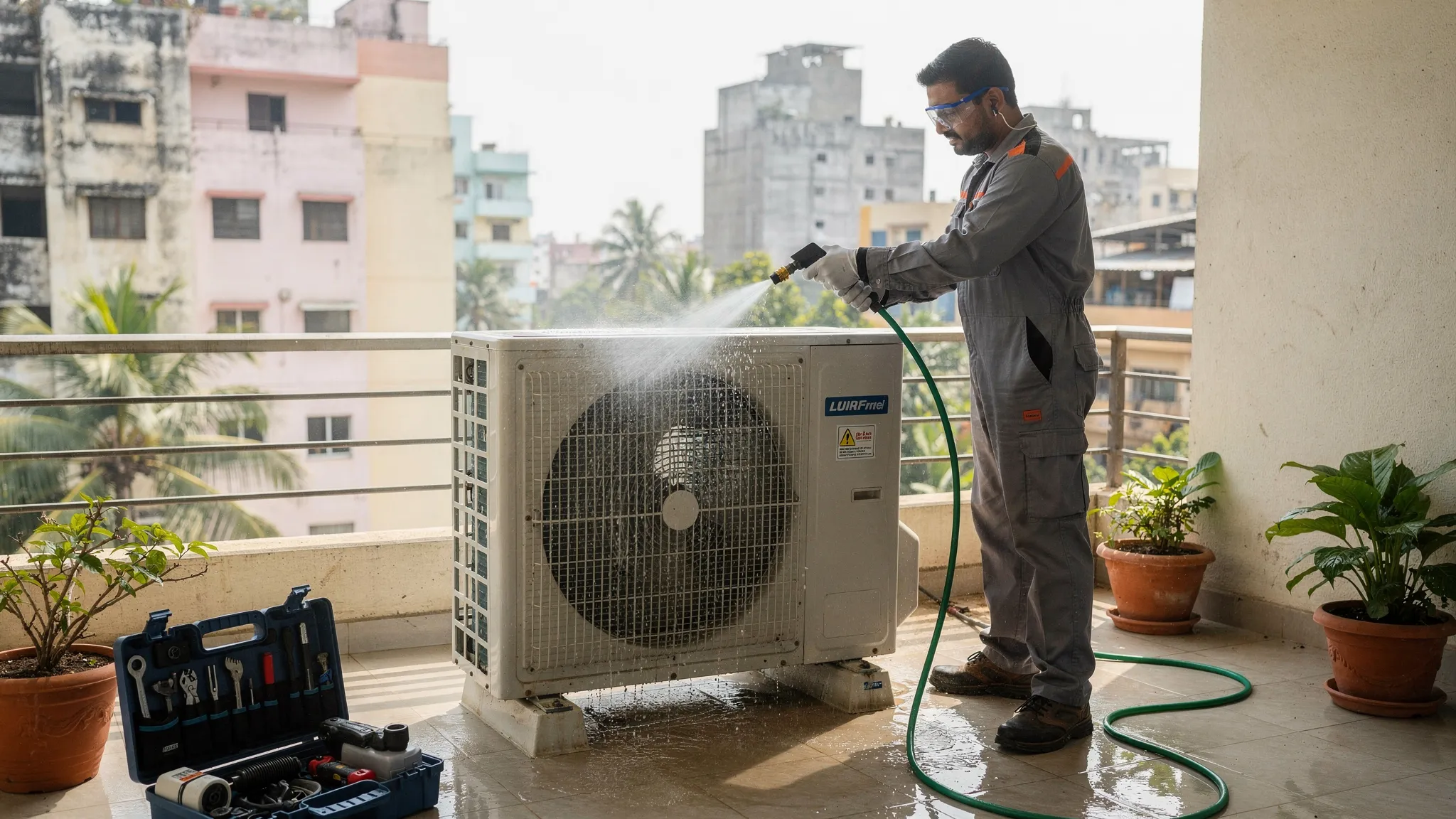
Chennai’s heat, humidity and coastal air put extra stress on your air conditioner condensing unit, the outdoor unit that rejects heat from your home or office. A little routine care can prevent breakdowns, cut power bills and extend compressor life. Use this quick, field-tested checklist to keep your condenser running efficiently through summers and monsoons. Learn more about how to maintain AC in Chennai’s extreme weather through this blog.
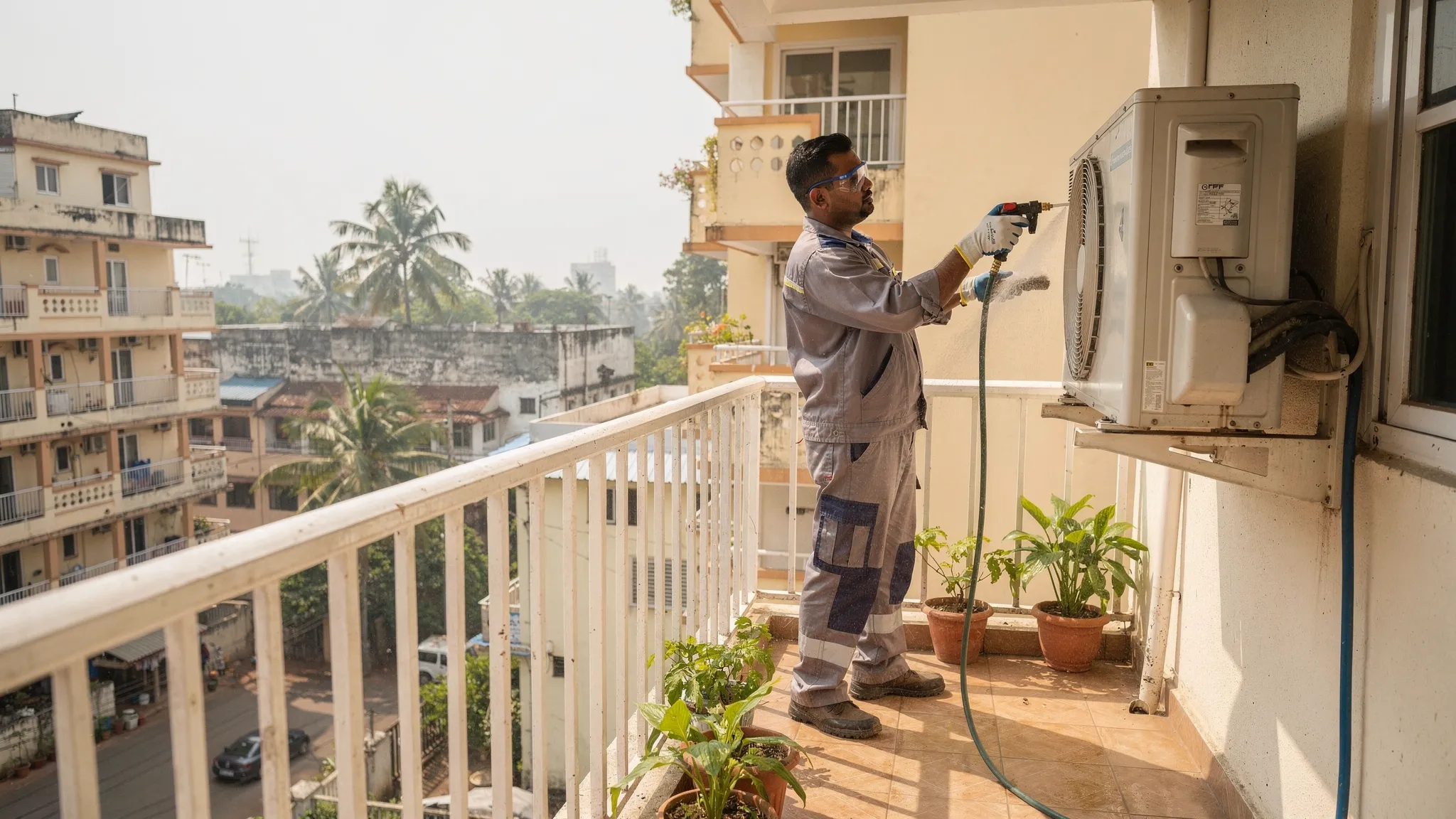
Always Safety First
Before you touch the air conditioner condensing unit, switch off power at the outdoor isolator or the indoor MCB. Use gloves and eye protection. If you notice burnt smells, exposed wires, oil stains or severe corrosion, stop and call a qualified technician.
For background on why maintenance matters, studies notes that dirty condenser coils reduce efficiency and accelerate wear, which means higher bills and more repairs.
The Quick Checklist You Can Follow
Use these simple checks to keep your outdoor unit healthy. Most items are safe for a homeowner or office admin. Anything involving refrigerant, internal electrical parts or sealed components needs a certified pro.
Monthly quick checks
- Power off, then clear debris, leaves, plastic bags and construction dust from around the cabinet. Keep at least 60 cm of free space on all sides for airflow.
- Visually inspect the condenser coil fins. If dusty, lightly brush in the direction of the fins or vacuum gently. Avoid bending fins.
- Confirm the unit sits level. A tilted base strains the compressor and can cause noisy operation.
- Check the fan guard and blades for cracks or obstructions. Spin the fan by hand to confirm it moves freely.
- Inspect refrigerant line insulation. Replace any cracked or missing pipe insulation to prevent energy loss and sweating.
- Look for oil stains on or under the unit. Oil often means a refrigerant leak, which requires a technician.
- Ensure potted plants, grills or screens are not blocking the discharge path. Good airflow reduces head pressure and power draw.
Pre-summer deep clean in Chennai
- With power off, rinse the coil from inside to outside using a low pressure garden hose. Do not use a pressure washer. For heavy grime, ask a pro to apply a non-caustic coil cleaner suited to your coil type.
- Clean the base pan and drain holes so rainwater and condensate can escape. Standing water causes corrosion.
- Tighten accessible panel screws and check rubber vibration pads. Replace cracked pads to reduce noise.
- Verify earthing and surge protection. Many areas experience voltage fluctuations, consider a quality voltage stabilizer or surge device where appropriate.
- Provide shade without blocking airflow. A canopy can reduce solar load, but keep recommended clearances.
Pre-monsoon checks
- Secure wall brackets and fasteners. Heavy winds and rain demand solid fixings.
- Confirm rainwater runs away from the unit. Where flooding is possible, discuss elevation options with a technician.
- Pest proof the cable and piping entry points using appropriate sealant or mesh to discourage rodents and insects.
- If the system will be unused for weeks, use a breathable cover that leaves the bottom open. Never run the unit while any cover is on.
Annual professional tune up
- Chemical coil cleaning with the correct, manufacturer approved cleaner, plus fin straightening where needed.
- Refrigerant charge verification using pressure, temperature and superheat or sub-cool readings. Top ups should only occur after leak detection and repair.
- Electrical testing of capacitors, contactors, relays and terminals, including tightening and insulation checks.
- Fan motor and compressor amp draw measurement, plus bearing and noise inspection.
- System performance test under load, including head pressure and temperature split to confirm efficient heat rejection.
- Drainage, base pan and cabinet corrosion inspection with anti corrosion treatment recommendations for coastal sites.
- Update of service records and recommendations for parts nearing end of life.
What Not to Do to Your Condensing Unit
- Do not spray a pressure washer at the coil, fins bend and microchannel coils can be damaged.
- Do not poke objects into the coil or fan guard, even slight fin damage reduces heat transfer.
- Do not add refrigerant as a guess. Low charge is usually a leak that must be found and fixed.
- Do not enclose the unit in a tight cabinet or stack storage around it. Starved airflow increases pressure and power consumption.
- Do not run the system with a cover on, even partially.
Chennai Specific Pro Tips
- Salt air care, lightly rinse the condenser with fresh water once a month to remove salt deposits, then let it dry before power up. Discuss anti corrosion coatings and stainless hardware with your service provider if you are near the coast.
- Construction dust is common. Increase outdoor coil cleaning frequency during nearby renovations.
- Voltage swings, where stabilizer free operation is not specified by the manufacturer, use a compatible stabilizer and ensure proper earthing.
- Balcony installations, maintain clear airflow paths. For side discharge units, keep the front and sides unobstructed for top discharge models, avoid overhead obstructions.
Quick Reference
| Task | Frequency | Who should do it |
|---|---|---|
| Clear debris and ensure 60 cm clearance | Monthly | Owner or facility staff |
| Gentle coil dusting or low pressure rinse | Monthly or as needed | Owner or facility staff |
| Check level, vibration pads and brackets | Quarterly | Owner for check, technician for fixes |
| Base pan and drain hole cleaning | Quarterly | Owner or technician |
| Electrical and refrigerant diagnostics | Annually | Technician |
| Anti corrosion inspection and treatment | Annually, more near coast | Technician |
| Full performance test under load | Annually, before peak season | Technician |
When to Call a Professional Immediately
- Cooling is weak, the outdoor unit is hot to touch and the breaker trips.
- You see oil stains on piping or around the coil, a classic leak sign.
- Loud humming, grinding or rattling noises begin suddenly.
- Ice forms on the refrigerant line or the unit short cycles Frequently.
- Visible corrosion holes or damaged fins across large areas.
Techno Power Aircons, the best AC dealer in Chennai as well as the top AC spare part dealers in Chennai has been maintaining residential and commercial systems since 1982, including VRF and VRV setups that need brand specific diagnostics and software tools. If you prefer predictable upkeep and fewer surprises, consider an AC AMC in Chennai.
Ready for Worry Free Cooling in Chennai?
If your checklist reveals issues or you simply want a professional once over, a trained team can help with cleaning, diagnostics and preventive care across all major brands. Ask about annual maintenance plans, emergency support and VRF or VRV specific servicing.
More than that you should get a service or request a quote for AC AMC in Chennai and also get complete end-to-end care for VRF or VRV systems from a trusted VRF or VRV AC dealer in Chennai.
A clean, well maintained air conditioner condensing unit runs quieter, cools faster and costs less to operate. Give yours a little attention now, it will work harder for you when Chennai’s heat is at its peak. Contact us now for expert guidance for AC condensing unit maintenance in Chennai and ensure peak performance all summer long.
Frequently Asked Questions
How often should I clean the condenser coil in Chennai?
Lightly dust or rinse monthly during peak dust or pollen periods, do a professional clean annually before summer. Coastal homes may benefit from a fresh water rinse every few weeks to remove salt.
Is it safe to wash the outdoor unit with water?
Yes, if power is off and you use low pressure water directed from inside to outside. Avoid soaking electrical compartments. If in doubt, book a professional cleaning.
What clearance does an air conditioner condensing unit need?
Follow your brand’s manual. As a practical rule, keep about 60 cm clear on sides, and do not block the discharge side. For top discharge units, keep overhead obstructions a metre or more away.
Do I need a voltage stabilizer for the outdoor unit?
Many modern ACs are stabilizer free within a specified input range. If your area has frequent fluctuations or you use older equipment, a good stabilizer or surge protector can protect compressors and electronics. Confirm compatibility with your dealer.
Should I cover the outdoor unit in the monsoon?
Do not cover a running unit. For long shutdowns, use a breathable cover that keeps leaves out while allowing moisture to escape. Never seal the unit in plastic.
My condenser looks corroded. Can it be saved?
Early surface corrosion can often be treated and protected by a technician. Severe coil or cabinet corrosion may require part replacement. A professional inspection is the fastest way to avoid repeated failures.
Leave a Reply