
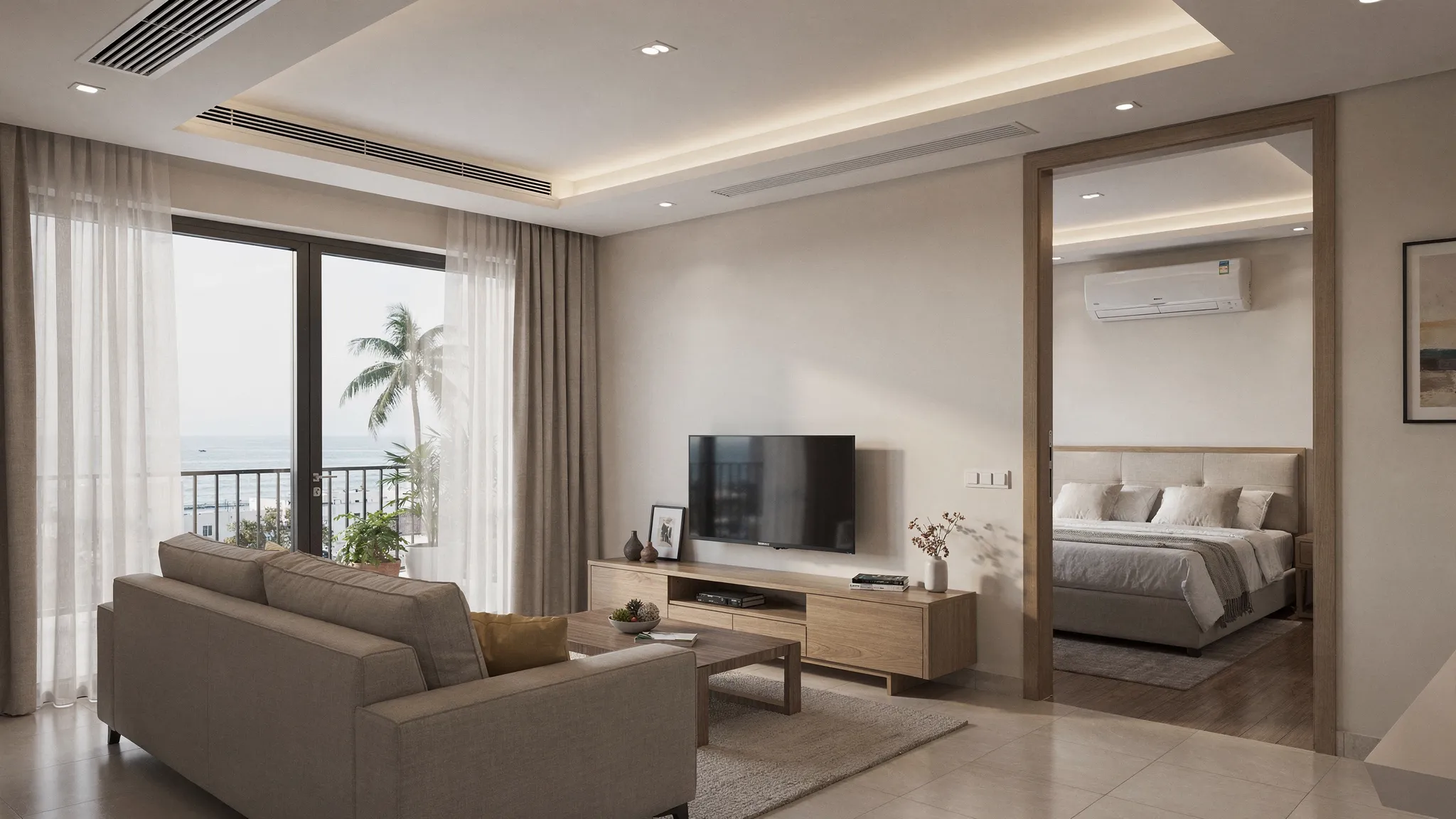
If you are comparing a ductable AC Vs split AC for an Indian home, the right answer depends on your floor plan, how many rooms you want to cool at the same time, the stage of your project and how much you care about aesthetics versus installation complexity. In Chennai and other coastal cities, heat plus high humidity also changes the calculation because steady, efficient dehumidification matters as much as raw cooling.
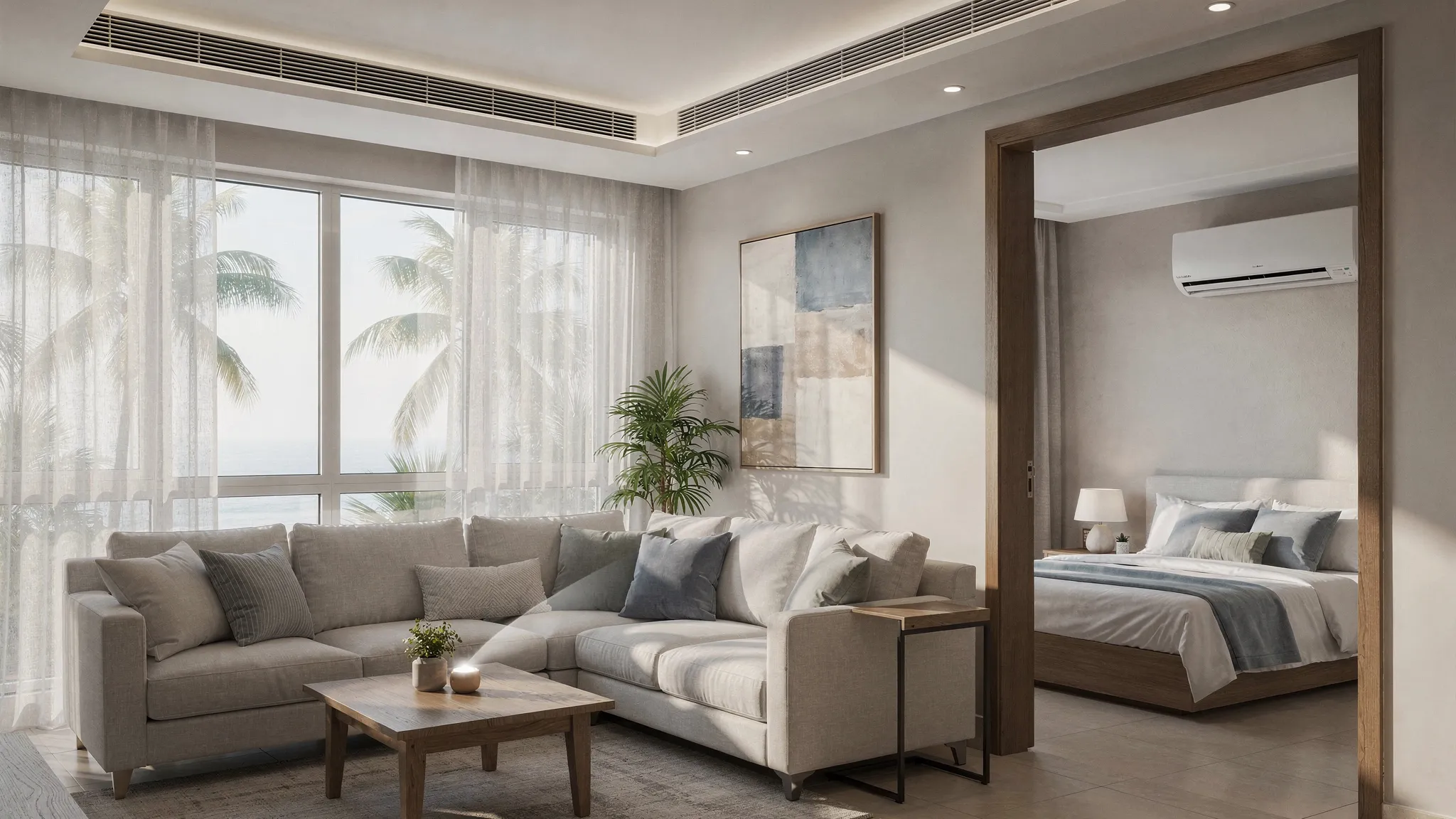
First – A Quick Refresher
- Split AC: A wall-mounted indoor unit pairs with an outdoor compressor. It cools a single room, installs quickly, and offers independent control. Inverter split models modulate compressor speed to save energy at partial loads.
- Ductable AC: A larger concealed indoor unit sits above a false ceiling. It pushes conditioned air through insulated ducts to multiple supply grills for one or more rooms. It is often called ducted or ductable split in the Indian market. Zoning is possible with motorized dampers and separate thermostats, but it must be designed in.
If you are at the renovation or new-build stage and want discreet grills with uniform airflow across larger zones, a ductable AC can be excellent. If you need an easy retrofit, room-by-room control and the lowest upfront cost, a split AC usually wins.
How Capacity and Climate Shape Your Choice
Right sizing is more important than the type itself. Oversizing leads to short cycles and clammy rooms because the system does not run long enough to remove humidity. Under sizing strains components and never quite cools. A quick rule of thumb based on typical Indian homes is helpful, but the most reliable method is a heat load calculation that factors in room size, orientation, insulation, occupancy and window area. Energy labels also matter. Higher stars generally mean lower electricity use at typical Indian conditions.
Ductable AC vs split AC – Side by Side
| Decision factor | Split AC | Ductable AC |
|---|---|---|
| Best for | One room at a time, retrofits, apartments | Multiple rooms or large open zones, villas, premium apartments under renovation |
| Installation | Fast, minimal disruption | Requires false ceiling, duct design, coordination with interiors |
| Space required | Small indoor unit on wall plus outdoor unit | Ceiling cavity for indoor unit and ducts, service access panels |
| Control | True room-by-room control per unit | Single thermostat by default, multi-zone control only with dampers and controllers |
| Aesthetics | Visible wall unit | Clean look with only grills or diffusers visible |
| Air distribution | Directional airflow near the unit | Uniform airflow, fewer hot spots |
| Energy use | Very efficient with inverter and high ISEER; no duct losses | Can be efficient with inverter unit and sealed, insulated ducts; zone control is key to avoid cooling unused areas |
| Noise | Typically very quiet indoors; compressor outside | Quiet with proper duct design and insulation; poorly designed ducts can add noise |
| Maintenance | Simple filter cleaning; easy access | Filter and coil access via ceiling; periodic duct hygiene and leak checks |
| Upfront cost | Lower | Higher due to ducts, grills, carpentry, controls |
| Running cost | Pay only for rooms you cool | Potentially higher if one thermostat runs multiple rooms needlessly; zoning narrows the gap |
| Retrofit ease | Excellent, even in finished homes | Challenging in finished homes without ceiling space |
| Expandability | Add another split for another room | Expanding later means modifying ducts and controls |
| Power backup | Easy to run one room on backup | Larger load, usually not ideal for small backup inverters |
When a Ductable AC Makes Sense in Indian Homes
- You are planning or redoing false ceilings and want a seamless look with only grills visible.
- You have a large open-plan living, dining and family space where uniform airflow matters.
- You want to serve two or more adjacent rooms that are usually occupied together and you are ready to invest in proper zoning for energy savings.
- You prefer the option to integrate fresh air and higher-grade filtration with the air distribution network.
For Chennai’s coastal climate, ductable systems can deliver very even temperatures and comfort in big spaces. Just plan for insulated ducts, a well-placed return air path, and a correctly sized inverter unit for steady dehumidification during muggy months.
If you want to explore design, grills or zoning strategies for ductable units in local homes, see our overview of options and services for ductable air conditioners. Explore why Techno Aircons is your trusted partner for Ductable Air Conditioners in Chennai.
When a Split AC is the Smarter Choice
- You need an immediate, cost-effective retrofit in a finished home.
- You value independent temperature control for each bedroom.
- You expect to cool only one or two rooms at a time to manage bills.
- You want the simplest maintenance routine and easy access to filters.
For most Indian apartments and builder floors, high-ISEER inverter split ACs in bedrooms and study rooms remain the most practical solution. They are quiet, straightforward to install and efficient when you only cool occupied rooms. Explore options and installation guidance from the split AC dealer in Chennai.
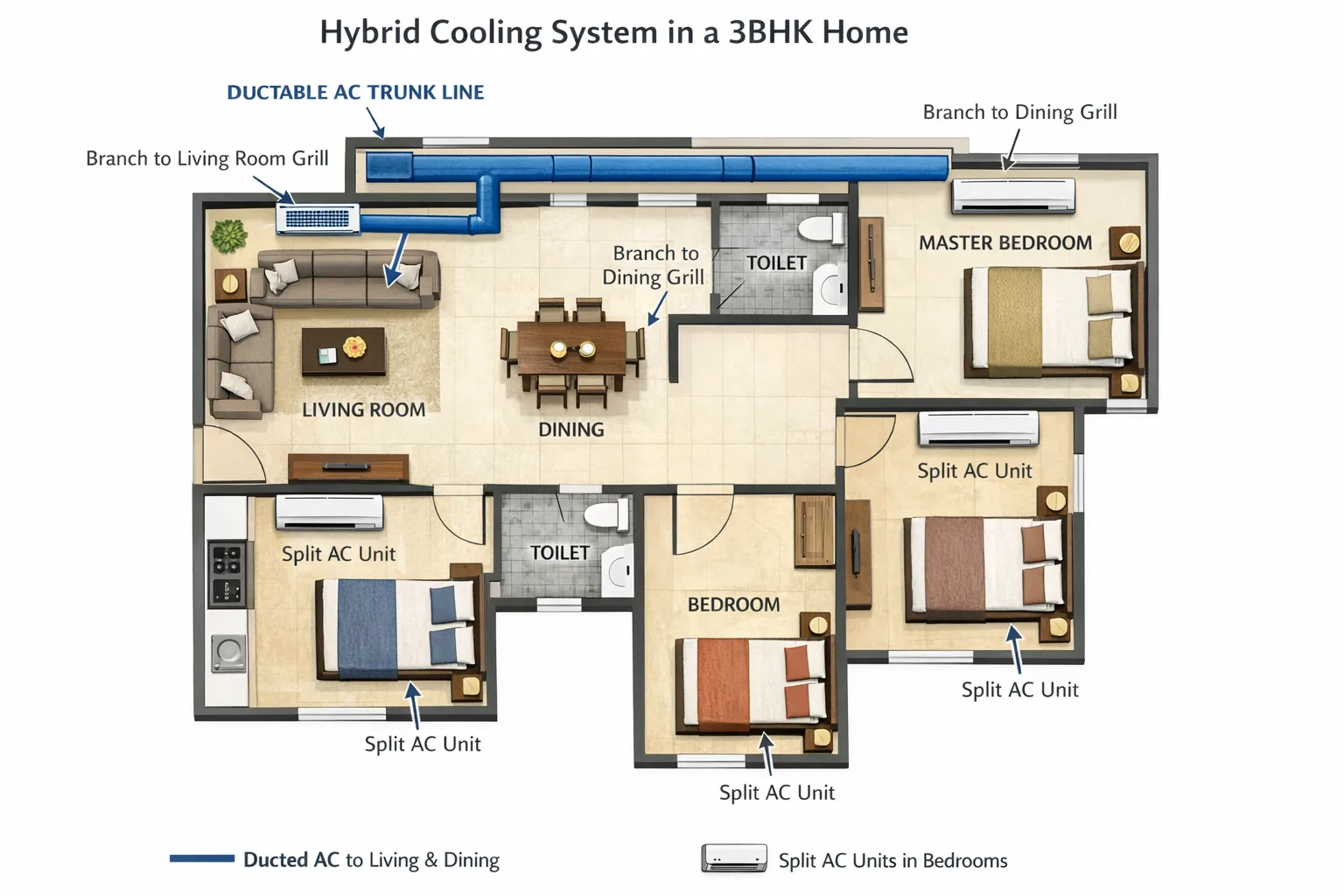
The Hybrid Strategy that Many Families Choose
You do not have to pick only one. A popular and effective plan is:
- One ductable AC for the living and dining area to ensure uniform comfort when family and guests gather.
- Separate inverter split ACs for bedrooms so each person can set a preferred temperature and schedule.
This approach balances aesthetics in common areas with maximum control and energy discipline in private rooms. If your home is large or has many zones, you can also discuss a VRF system, which connects multiple indoor units to a single outdoor unit for high efficiency and flexible control. If that sounds interesting, learn more about options with the best VRF AC dealer in Chennai.
Energy and Comfort Details that Matter in Chennai
- Inverter technology helps both split and ductable units operate efficiently at partial loads, which improves dehumidification and reduces start-stop cycles.
- Set realistic indoor temperatures. Raising the set point by a degree or two compared to very low settings can reduce electricity consumption, especially during peak humidity.
- Seal and insulate ducts properly for ductable ACs to avoid condensation and energy loss. Pay attention to return air sizing and placement to keep noise low and maintain balanced airflow.
- In coastal areas, choose outdoor units with corrosion-resistant coils and housings. Provide adequate clearance for sea breeze and salt-air exposure, and include routine coil cleaning in your maintenance plan.
- Look for higher ISEER and star ratings where practical. Better ratings usually translate to lower operating costs in India’s long cooling seasons.
Installation Reality Check
Split AC
- Site readiness: wall strength, safe outdoor placement and a gentle slope for the drain line.
- Piping and wiring: keep line lengths within manufacturer recommendations when possible.
- Electrical: ensure proper earthing and dedicated power where advised.
Ductable AC
- Ceiling planning: align trunk and branch ducts with false ceiling depths, lighting and fan placements.
- Return air path: size the return grill and filters to avoid whistling noise and pressure drops.
- Access: include service hatches for filter inspection and coil cleaning.
- Controls: if you want independent set points for multiple rooms, specify motorized dampers and a zoning controller during design.
A well-installed system often lasts longer and performs better than a poorly installed premium model. Choosing an experienced local team for layout, load calculation and commissioning makes a significant difference.
Maintenance and Total Cost of Ownership
- Split units need periodic filter cleaning, indoor coil checks and outdoor coil cleaning before peak summer. They benefit from an annual health check to preserve efficiency.
- Ductable systems add duct inspections, filter changes and periodic checks for insulation integrity and air leaks. Clean, dry ducts protect indoor air quality and keep running costs in check.
An Annual Maintenance Contract spreads preventive care across the year and reduces surprise breakdowns. If you want a predictable upkeep plan in Chennai, explore our AC AMC in Chennai.
Three Common Scenarios and What Usually Works Best
- Compact 2BHK apartment with standard ceiling heights
A pair of inverter split ACs, one in the master bedroom and one in the secondary room or living room, typically gives the best control and cost balance. Add a third split only if the living room is used heavily or is west facing with high solar gain.
- Large 3BHK with open living and dining, ongoing interior work
A ductable AC for the living and dining zone with concealed grills elevates the look and ensures even cooling. Inverter split ACs in bedrooms maintain independent comfort and allow you to switch off what you do not use.
- Villa or duplex with frequent entertaining
A higher capacity ductable system for the ground floor common areas, combined with individual split ACs upstairs, often delivers a premium experience with sensible energy control. Plan zoning and returns carefully to keep noise and energy use low.
A Simple Checklist to Decide Faster
- How many rooms do you need to cool at the same time most days of the week?
- Are you renovating or can you add a false ceiling without major disruption?
- Do you want the cleanest look in living areas with only grills visible?
- Is independent bedroom temperature control a top priority for your family?
- Will you typically run only one or two rooms on backup power during outages?
If you answered yes to renovate, aesthetics and multi-room cooling at once, a ductable AC or a ductable-split hybrid could be right. If you want fast install, lower upfront cost and granular control, go with inverter split ACs.
Why Choose a Expert like Techno Aircons
Since 1982, Techno Power Aircons, the best AC dealer in Chennai has helped homeowners to choose, install and maintain the right cooling mix for their plans and budgets. We work with leading brands and offer end-to-end support, including sales, installation and after-sales care. Beyond split and ductable units, our team also designs and supports VRF and VRV systems and we provide AMC solutions to keep your equipment running at peak efficiency.
If you are weighing ductable AC vs split for your home, request a site assessment with our specialists. We will size the load properly, propose clear options and explain trade-offs in plain language so you can make a confident decision. You can also ask about current offers, including zero-EMI options and seasonal discounts.
Ready to plan your system? Contact us now to get a expert guidance for a custom hybrid design for your floor plan.
Leave a Reply