
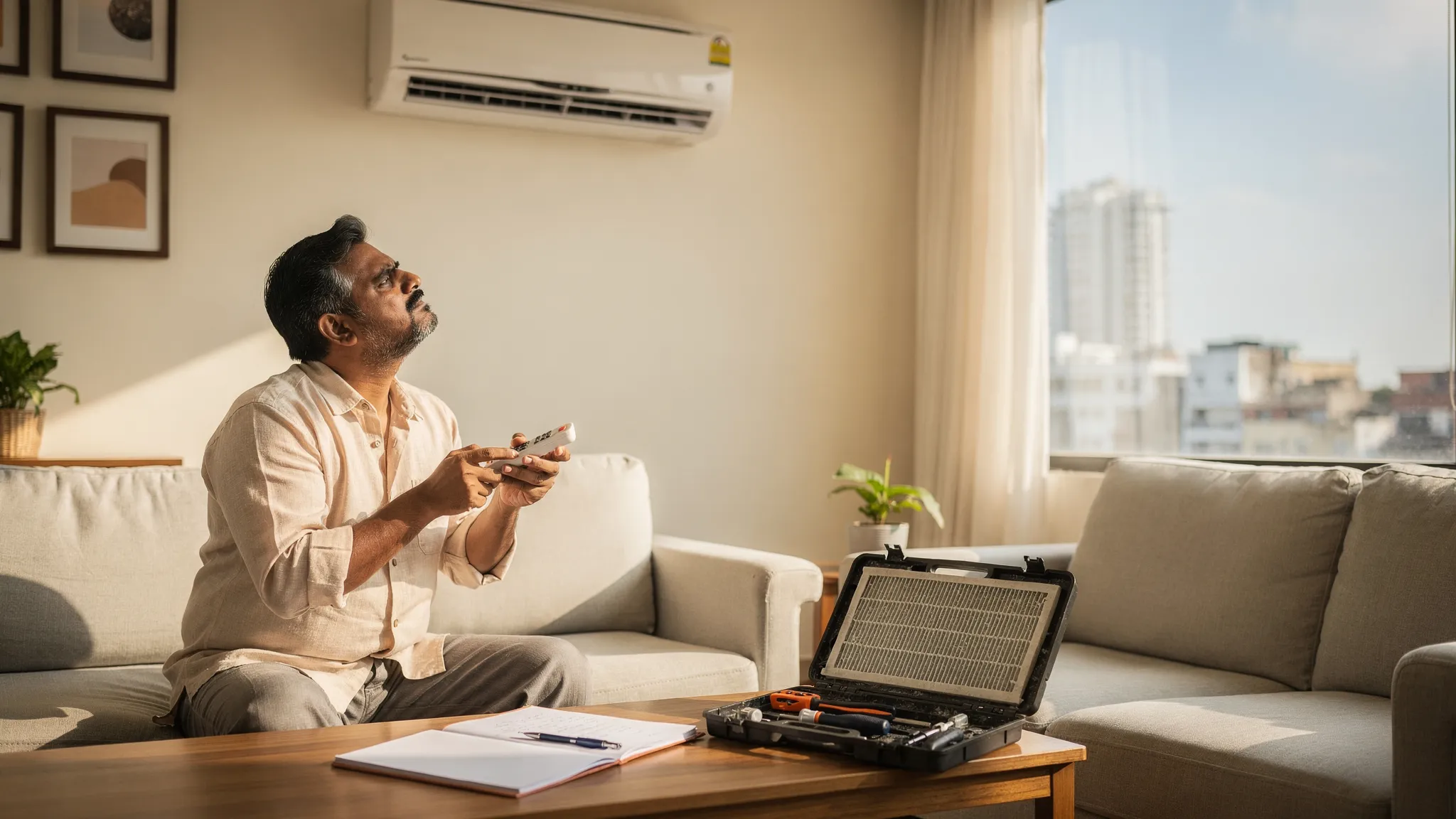
Chennai’s summers are unforgiving and a down AC can turn a normal day into a heat marathon. The fastest, most cost‑effective way to restore comfort is often the right spare part installed at the right time. This blog explains the essentials Chennai homeowners should know about air conditioning spare parts, how to spot what is likely failing, what you can safely handle yourself and when to call a professional.
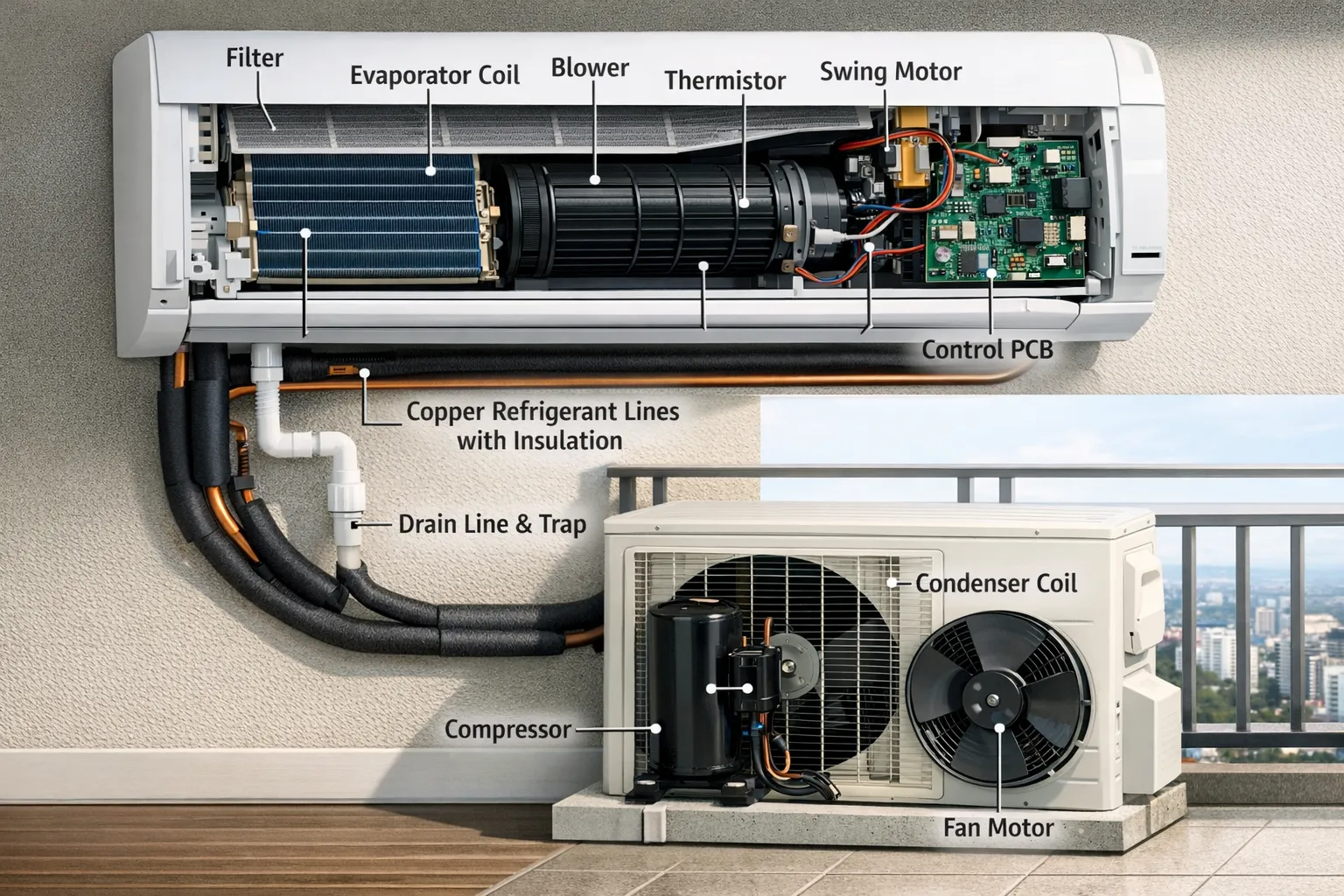
A Quick Primer on AC Spare Parts for Homes
Most Chennai homes use split ACs. The parts you will encounter fall into three groups:
- Cooling hardware, the refrigerant circuit and airflow path, for example compressor, coils, motors, blower wheels, copper lines and insulation, drain line and pan.
- Electrical and control parts, for example capacitors, control PCB, sensors or thermistors, fuses, surge protection, stabilizer, remote.
- Mounting and protection, for example outdoor brackets, anti‑vibration pads, weather shrouds and covers used only when the unit is off.
Getting the correct part number and a reputable source matters. Wrong or low‑quality parts can reduce efficiency, increase bills or void your warranty.
The Most Common AC Spare Parts and What They Do
Use this table to connect symptoms you see at home with likely parts, plus safe checks you can try before booking a service visit.
| Spare part | What it does | Typical symptoms | Safe homeowner check | Typical fix |
|---|---|---|---|---|
| Air filter | Traps dust before air reaches the coil | Weak airflow, higher bills, icing on indoor coil | Remove and clean with water, dry fully | Clean or replace filter media |
| Capacitor, indoor or outdoor | Helps motors start and run | Outdoor fan stops, humming from unit, frequent tripping | Visual only, look for bulge or leak, do not touch terminals | Replace with identical microfarad and voltage rating |
| Control PCB or inverter board | Brain of the system, manages compressor and fans | Unit dead, lights blink error codes, random shutoffs | Power cycle at MCB, note error code from display or remote | Diagnose and replace or rework PCB |
| Thermistor or room sensor | Senses temperature for accurate cooling | Overcooling or short cycling, wrong temperature reading | Compare set point and actual room temp with a thermometer | Replace faulty sensor, recalibrate if supported |
| Indoor blower motor or wheel | Moves cold air through the room | Whistling or grinding noise, poor airflow | Check for clogged filter, look for ice on coil | Clean wheel, replace motor or bearings |
| Outdoor fan motor | Cools the condenser coil | Hot outdoor unit, loud buzzing, poor cooling in heat | Observe if outdoor fan spins freely or stalls | Replace motor and capacitor if required |
| Compressor | Pumps refrigerant through the system | No cooling, tripping at start, loud knocking | Check that outdoor fan runs and airflow exists | Electrical and mechanical tests, repair or replace compressor |
| Refrigerant line insulation | Prevents sweat and energy loss on cold line | Water dripping from lines, higher bills | Inspect for cracked or sun‑damaged insulation | Replace with UV‑resistant closed‑cell insulation |
| Drain line and pan | Removes condensate water | Water leak at indoor unit, damp wall, musty smell | Flush with mild pressure or wet‑vac if accessible | Clear blockage, replace hose or add condensate pump if needed |
| Swing motor or louvre kit | Directs airflow | Vanes stuck or not swinging | Power cycle and reset swing, check for obstructions | Replace motor or linkage |
| Remote control | Sends commands | No response, intermittent control | Replace batteries, check for IR signal with phone camera | Replace remote or repair keypad |
| Stabilizer or surge protector | Protects electronics from voltage issues | Frequent PCB failures, random restarts during voltage dips | Verify stabilizer capacity and output with a technician | Fit right‑sized stabilizer or add surge protection |
Regular filter cleaning alone can improve cooling performance and help cut energy use. Studies noted that replacing clogged filters can reduce air conditioner energy consumption by 5 to 15 percent, which is meaningful in a long Chennai summer.
Symptom to Part – A Quick Guide Before You Call
- Poor cooling after a storm or voltage dip, likely capacitor, PCB or stabilizer issue.
- Good airflow but warm air, possible refrigerant loss from a leak, outdoor fan not running or a failing compressor.
- Unit cools, then drips water indoors, likely clogged drain line or inadequate pipe slope, also check for missing insulation on the drain.
- AC short cycles, starts and stops too often, sensor placement or thermistor fault or oversized unit behavior amplified by high humidity.
- Outdoor unit very hot to touch, outdoor fan motor or heavy dirt on condenser fins, turn off power and book a service.
If you suspect a refrigerant leak, do not ask for a simple gas top‑up. The technician should find and fix the leak first, then recharge with the correct refrigerant and oil type. Mixing refrigerants damages compressors.
OEM vs Compatible Parts – How to Choose Wisely
- Match ratings exactly. Capacitors must match microfarads and voltage. Motors need the right speed, shaft and power ratings. PCBs require the exact part number and revision.
- Prefer OEM or brand‑approved parts for compressors, PCBs, sensors and motors. Universal remotes and drain hoses are fine when they meet spec.
- Protect your warranty. If your AC is in warranty, use authorized parts and service.
- Ask for a bill with the part number and warranty period and keep old parts for comparison until you are satisfied.
For authentic sourcing and guidance, consider working with a local expert. Techno Power Aircons, the top AC Spare Part Dealers in Chennai has supplied and serviced genuine AC spare parts in Chennai since 1982.
Chennai’s Climate Adds Extra Stress – Plan Parts Accordingly
- Salt air and humidity, coastal corrosion attacks coils, fan blades and brackets. Opt for anti‑corrosion coated coils and stainless or galvanized outdoor brackets and schedule periodic coil cleaning.
- Monsoon downpours, make sure outdoor units have clear drainage and are mounted with adequate clearance, never enclose an operating unit.
- Heat waves, high ambient temperatures expose weak capacitors and fan motors, prophylactic checks before peak summer reduce mid‑season failures.
- Voltage fluctuation, a properly sized stabilizer and surge protection can save PCBs and compressor drives. Discuss options with your technician.
- Insulation matters, UV‑resistant closed‑cell insulation on suction lines prevents dripping and helps keep bills under control in humid weather.
DIY vs Professional – Draw the Safety Line
Safe for most homeowners:
- Clean or replace air filters.
- Gently flushing the drain line from the access point if provided and there is no risk of water damage.
- Replacing remote batteries and using the remote’s self‑diagnostic features if your model supports error codes.
- Cleaning outdoor fins with a soft brush while the unit is powered off, do not bend fins, avoid pressure washing.
Call a trained technician for:
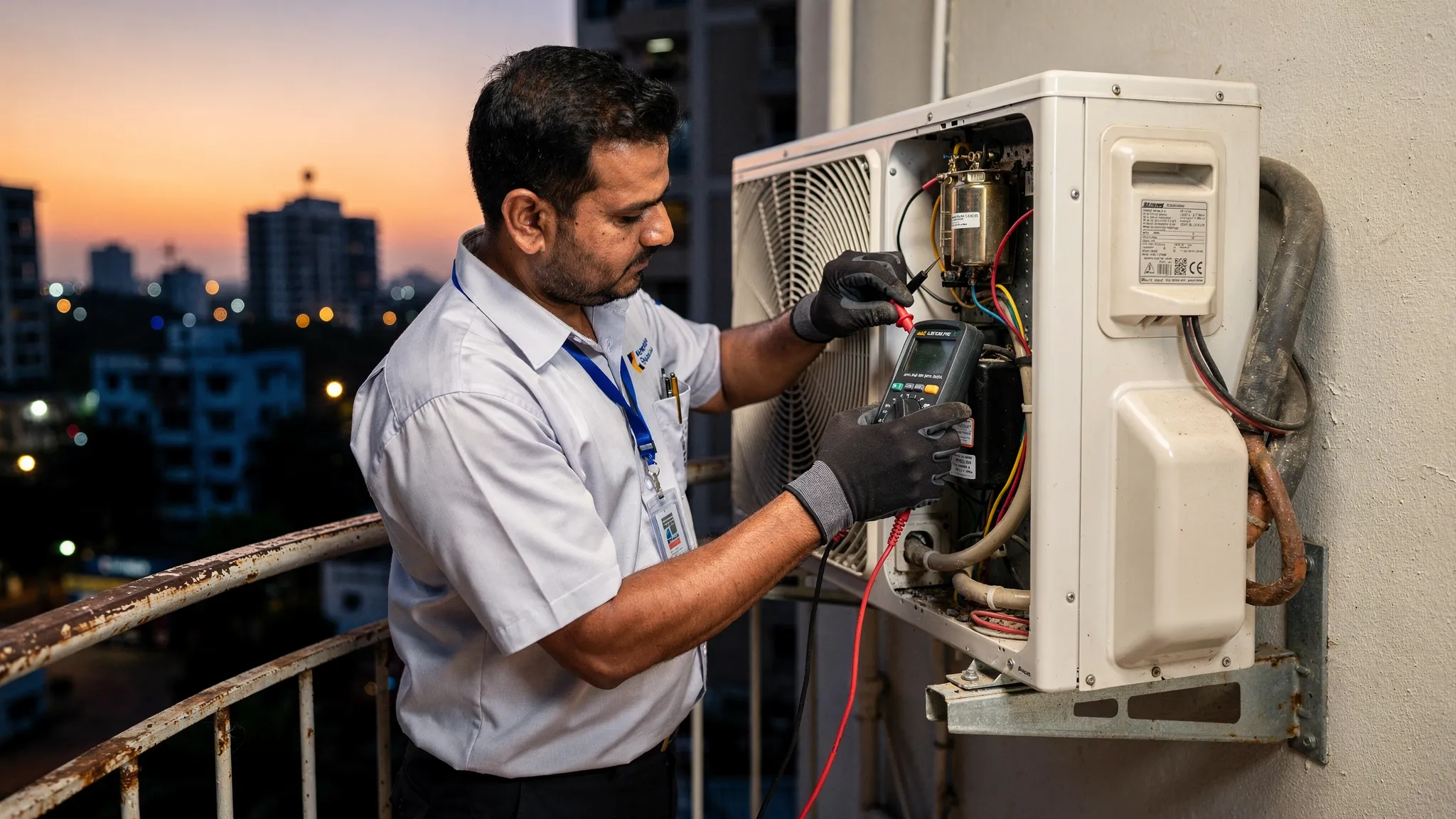
- Any work on powered components, capacitors, PCBs, motors, wiring or the MCB.
- Refrigerant issues, leaks, compressor or the expansion device.
- Persistent tripping, burning smells or water near electrical parts.
- VRF or multi split systems where multiple indoor units share an outdoor system.
How to Order the Right Spare Parts
- Capture the model and serial number from both indoor and outdoor nameplates, take clear photos.
- Record symptoms, temperature readings, noises and any error codes or blinking patterns.
- Photograph the failed part if visible, for example a swollen capacitor or snapped louvre arm.
- Share installation details, stabilizer model, approximate age of the unit and prior repairs.
- Decide on OEM or compatible options, confirm warranty in writing.
- Book installation with a professional, parts like capacitors and PCBs require safe handling.
If you prefer a single point of contact, Techno Power Aircons can source the exact part, install it and check the rest of your system in one visit. Explore their AC AMC in Chennai if you want predictable upkeep and fewer surprises.
Preventive Care that Extends Part Life
- Filters, clean every 2 to 4 weeks in peak season. Dust and humidity in Chennai clog filters faster.
- Outdoor unit, keep 18 to 24 inches of clearance around the condenser for airflow, trim plants and remove debris.
- Drainage, ask for a proper service loop and trap during installation, schedule a drain flush before monsoon.
- Electrical health, fit the right stabilizer, avoid sharing the AC circuit with heavy appliances.
- Seasonal service, one professional service before summer and one before monsoon is a good baseline. Techs can test capacitors, check motor bearings, clean coils, tighten terminals and verify refrigerant charge.
For practical do’s and don’ts tailored to our city’s weather, review how to maintain your AC for Chennai’s extreme weather.
Notes for Homes with Multi Split or VRF Systems
Some villas and premium apartments in Chennai use multi split or VRF setups. These systems have additional parts like electronic expansion valves and branch selector kits. Diagnosis requires brand‑specific tools and software and spare parts must match firmware versions. For these systems, always use an experienced dealer and technician. If you need help connect with a VRF AC dealer in Chennai.
When to Repair and When to Replace the Part
- Age and repeat failures, frequent PCB or motor failures on a 9 to 12 year old unit can signal it is time to evaluate replacement rather than repeated repairs.
- Coil condition, heavily corroded coils near the coast may justify a replacement indoor or outdoor section if available from the brand.
- Compressor, a compressor replacement is a major decision. Compare the cost of the job and expected remaining life with a new high‑efficiency unit.
A trusted dealer will provide both options, repair and replacement with transparent pros and cons.
The Bottom Line for Chennai Homeowners
- Start with basic checks, clean filter, confirm drainage, note error codes.
- Protect electronics, use a stabilizer and surge protection suitable for your AC’s capacity.
- Buy parts you can trust, prioritize OEM or approved components for critical items.
- Fix the cause, not just the symptom, repair leaks before charging refrigerant and address power quality issues to prevent repeat PCB failures.
- Schedule preventive service before summer and monsoon to catch weak capacitors and motors early.
If you want a no‑hassle route to the right spare parts and dependable installation, talk to a local expert who knows Chennai’s climate and building styles. Techno Power Aircons in Chennai has been helping homeowners since 1982 with genuine parts, professional installation and strong after‑sales support. Get help today at Techno Power Aircons, or speak with their team about sourcing parts and booking service.
Leave a Reply